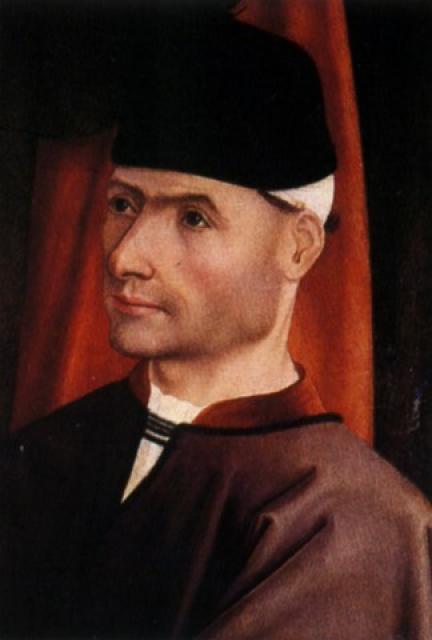
Jean De Dunois
 France
- Jean de Dunois, Count of Dunois and Longueville
- Early Life and Rise to Prominence
- Role in the Hundred Years' War
- Conquest of Guyenne and Legacy
- Family and Legacy
Jean de Dunois, Count of Dunois and Longueville
Birth and FamilyJean de Dunois, also known as the Count of Dunois and Longueville, was a renowned French military leader during the Hundred Years' War. He was born in 1389 as the illegitimate son of Louis I, Duke of Orléans, and Mariette d'Enghien. His mother later married Obert le Flameng, who raised Jean alongside his legitimate father's family.
Early Life and Rise to Prominence
Upon the death of his father and stepmother, Jean was placed under the guardianship of the Dauphin Charles, the future King Charles VII. Charles acknowledged Jean's services, stating that he had participated in countless battles from a young age, showing great valor and determination in restoring French sovereignty.
Jean distinguished himself as a leader of the French national party, fighting against the English. His first significant military success came in 1425 with the defense of Mont-Saint-Michel. In 1427, he dramatically forced the English to lift their siege of Montargis and later became the driving force behind the defense of Orléans, galvanizing the garrison and inspiring them to believe in the hope brought by Joan of Arc.
Role in the Hundred Years' War
Jean de Dunois played a crucial role in the Hundred Years' War. After the capture and execution of Joan of Arc, he remained steadfast, leading the French army in prolonged battles against the English. He captured Chartres in 1431 using a clever ruse, and subsequently defeated Bedford at Lagny, seizing key strongholds surrounding Paris.
In 1440, Dunois briefly sided with the rebellious French aristocrats but returned to serve the king as commander-in-chief in Normandy. Under his leadership, the French army captured Rouen, Harfleur, and Cherbourg, liberating Normandy from English control.
Conquest of Guyenne and Legacy
Dunois was tasked with the reconquest of Guyenne. He implemented strict measures to maintain discipline and order within the French army. Despite the challenges posed by the entrenched English presence, Dunois captured Bordeaux in 1451, expelling the English from all but Bayonne, which fell shortly after.
For his unwavering service and loyalty, Dunois was granted royal blood status and the right to the throne. However, his popularity made him a threat to King Louis XI, who exiled him to Normandy. Dunois later led the opposition against the king, negotiating favorable terms that restored his titles and positions.
Family and Legacy
Jean de Dunois married twice. His first marriage to Marie Louvet produced no children, while his second marriage to Marie d'Harcourt resulted in four children, including Jean, the Count of Longueville, and François II, the great chamberlain of France.
Dunois died in 1468, leaving behind a legacy as a skilled military strategist and a key figure in the liberation of France from English rule. His family, the House of Orléans-Longueville, continued to play an important role in French history until its extinction in 1694.