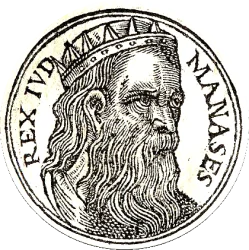
Jehoshaphat
Jehoshaphat is remembered as a king who tried to strengthen Judah at home while navigating a dangerous neighborhood abroad. The Hebrew Bible portrays him as a religious reformer, an organizer of courts, and a ruler whose alliances with the northern kingdom of Israel could bring both opportunity and danger. His reign in the ninth century BCE is known chiefly through biblical narratives, which offer different emphases on his policies and legacy.
A King of Judah
Jehoshaphat was the son of Asa and ruled the southern kingdom of Judah after his father. His reign is usually placed around 870–848 BCE, though ancient regnal chronologies are reconstructed and vary among reference works. He ruled from Jerusalem during a period when Judah and the northern kingdom of Israel were separate states, sometimes rivals and sometimes partners.
The biblical books of Kings and Chronicles are the principal surviving narratives about his reign. Kings gives a relatively concise account, while Chronicles devotes several chapters to his military, religious, and administrative activity. These texts were written and edited within religious traditions, and their accounts should be read as both historical memory and theological interpretation.
Reform and Administration
In Chronicles, Jehoshaphat begins his reign by fortifying Judah’s cities and strengthening the kingdom. The text presents him as promoting the worship of the God of Israel and sending officials, Levites, and priests throughout Judah to teach the law. It also credits him with appointing judges in fortified towns and establishing a court in Jerusalem for difficult cases.
These measures became central to his reputation as a just and devout ruler. They also reflect the chronicler’s interest in the relationship between religious observance, sound leadership, and the stability of the kingdom. The exact form and reach of the reforms cannot be independently reconstructed in detail from surviving evidence, but they shaped the way later Jewish and Christian readers understood his reign.
Alliances with Israel
Jehoshaphat’s foreign policy brought him into close contact with the northern Israelite dynasty of Omri and Ahab. A marriage alliance linked the royal families, and Jehoshaphat joined Ahab in a campaign to recover Ramoth-gilead from Aram. In the account in 1 Kings, the prophet Micaiah warned that the campaign would fail. Ahab was killed in battle, while Jehoshaphat escaped and returned to Jerusalem.
The relationship continued under Ahab’s son Jehoram. Jehoshaphat joined the king of Israel and the king of Edom in a campaign against Moab. Chronicles also tells of a later crisis in which a coalition of Moabites, Ammonites, and others threatened Judah. Jehoshaphat led the people in prayer, and the biblical narrative describes the coalition’s defeat without a battle by Judah’s army. These episodes show how the biblical writers understood his dependence on alliances: cooperation could expand Judah’s influence, but also expose him to moral and military risk.
A maritime venture with Ahaziah of Israel also ended in failure. According to Kings, the two kings attempted to build ships at Ezion-geber for a voyage to Ophir, but the ships were wrecked before they could sail. The account presents the failed expedition as a consequence of Jehoshaphat’s partnership with a ruler whose conduct displeased God.
Succession and Legacy
Jehoshaphat was succeeded by his son Jehoram. The biblical account reports that he died after a reign of twenty-five years and was buried with the kings of Judah in Jerusalem. Chronicles praises his public reforms but also criticizes his alliances with Israel, making his story one of achievement mixed with warning.
The historical record outside the Bible does not provide a secure contemporary biography of Jehoshaphat. The Tel Dan inscription, an Aramaic monument from the ninth century BCE, is often discussed in connection with the dynasty of Judah because it refers to the “House of David,” but it does not name Jehoshaphat. His life is therefore known mainly through the biblical texts, whose accounts preserve a portrait of a ruler wrestling with faith, statecraft, and the costs of political compromise.
Over time, Jehoshaphat became an enduring example of kingship in Jewish and Christian tradition. He is remembered both for efforts to strengthen Judah’s religious and judicial life and for the dangers that followed when alliances drew him into conflicts beyond his kingdom.