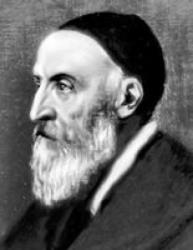
Jiovanni Pordenone
 Italy
Italy- Italian Renaissance Painting in the Early 16th Century
- The Venetian Masters
- Giovanni Antonio Pordenone
- Early Career and Papal Patronage
- The Passion Frescoes in Cremona
- Venetian Period
- Legacy and Significance
Italian Renaissance Painting in the Early 16th Century
The artistic evolution of Italy during the High Renaissance was a period of rapid, dramatic change. After Renaissance art reached its peak in the early 16th century with the works of Raphael, Michelangelo, and others, a new generation of restless and experimental artists emerged.
The Venetian Masters
In northern Italy, where a distinct artistic tradition prevailed, three masters stood out: Correggio, Lorenzo Lotto, and Giovanni Antonio Pordenone. They shared a common interest in atmospheric perspective, light and shade effects, and expressive drama.
Giovanni Antonio Pordenone
Born in the provincial town of Friuli, northeast of Venice, Pordenone received his training far from the artistic centers of the time. This influenced his style, characterized by a straightforward and rustic expressiveness.
Despite visiting Venice and studying the works of Giorgione and Titian, Pordenone maintained his independence. He refused to imitate their contemplative or serene approaches, instead favoring sharp contrasts, distorted figures, and energetic movement.
Early Career and Papal Patronage
Pordenone's early works in Treviso, Alviano, and other Italian towns showcased his distinctive style. However, after studying Raphael's masterpieces in Rome, he did not adopt the classical harmony they embodied. Instead, he exaggerated forms and employed expressive distortions.
This unconventional style hindered Pordenone's acceptance in the papal capital. He left Rome and returned to provincial cities, where he found work in Cremona's cathedral.
The Passion Frescoes in Cremona
The frescoes executed in Cremona's cathedral (1520-1521) are considered Pordenone's masterpieces. Depicting the Passion of Christ, they are characterized by extreme emotion, wild gestures, and a sense of impending doom. They are often cited as precursors to Picasso's "Guernica."
Venetian Period
From 1527 onward, Pordenone settled permanently in Venice. While working for Venetian churches, he toned down his style to cater to the tastes of his patrons. He even competed with Titian for commissions.
Although Titian was preferred in oil painting, Pordenone's expressive and experienced frescoes gave him an advantage. Unfortunately, many of these works have been damaged or lost.
Despite the loss of these frescoes, Titian recognized the value of Pordenone's creations. The later, "Venetian" style that Pordenone adopted is evident in works outside Venice, such as the frescoes in the Church of Madonna di Campagna in Piacenza.
Legacy and Significance
Pordenone's art played a crucial role in the development of Venetian painting. His bold and expressive approach influenced later artists like Tintoretto and contributed to the emergence of the Baroque style. However, his works were often overlooked or forgotten, and his true significance was not fully appreciated until the 20th century.