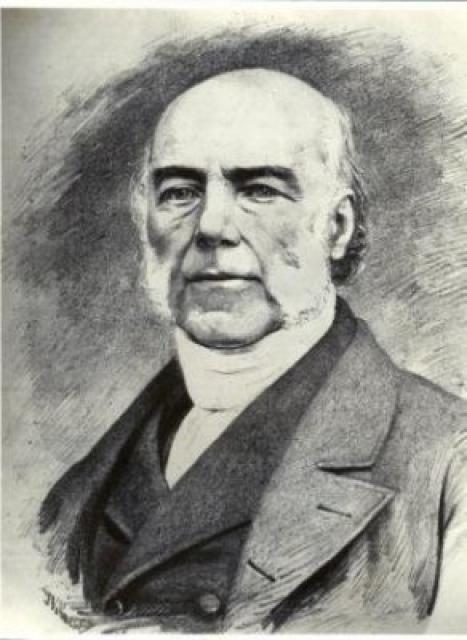
Joachim Barrande
 France
- Joachim Barrande: French Paleontologist and Geologist
- Early Career and Royal Connections
- Exile and Scientific Explorations
- Geological Investigations
- "Theory of Catastrophes"
- Death and Legacy
- Collection and Commemoration
Joachim Barrande: French Paleontologist and Geologist
Joachim Barrande was a renowned French paleontologist and geologist who left an indelible mark on the scientific understanding of ancient life.
Early Career and Royal Connections
Born in Saugues, France, Barrande initially pursued studies at the École Polytechnique in Paris before becoming the tutor to the grandson of King Charles X, Count Henri de Chambord.
Exile and Scientific Explorations
Following the overthrow of the French monarchy in 1830, Barrande accompanied the royal family to Scotland and later to Bohemia, a region then part of the Austrian Empire. It was in Bohemia that his scientific career flourished.
Geological Investigations
Barrande meticulously examined the Lower Paleozoic strata of Central and Western Bohemia. His seminal work, "Système silurien du centre de la Bohême" (1852), established a solid foundation for understanding the fauna of the Earth's earliest sedimentary formations.
"Theory of Catastrophes"
Barrande supported Georges Cuvier's "Theory of Catastrophes," which proposed that Earth's geological history was shaped by a series of catastrophic events.
Death and Legacy
Barrande died in Frohsdorf, Austria, one month after his former pupil, Count de Chambord. In recognition of his contributions, a Prague suburb (Barrandov), a film studio, a bridge in Prague, and a geological structure (the Barrandian) were named after him.
Collection and Commemoration
Barrande's extensive geological and paleontological collections form part of the Prague National Museum's holdings. The 200th anniversary of his birth was commemorated by the Czech Republic with a postage stamp and two stamps in 1999.


