Joan Robinson
 Great Britain
Biography of Joan Robinson
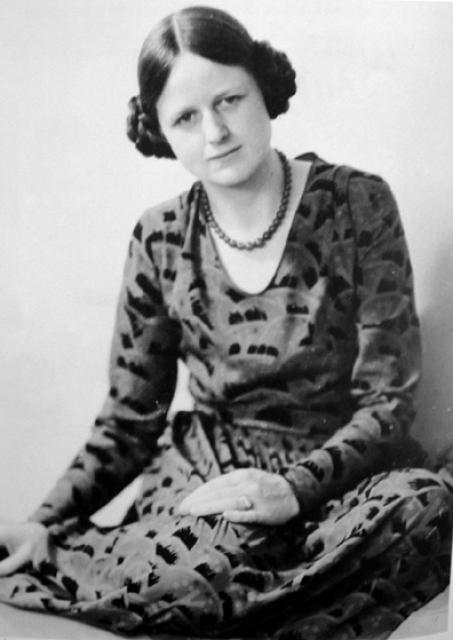
Joan Violet Robinson, a post-Keynesian economist from England, is most well-known for her work in monetary economics and her significant contributions to economic theory. Born on October 31, 1903, in Surrey, she was the daughter of Major General Frederick Barton Maurice. Robinson studied economics at Girton College, Cambridge.
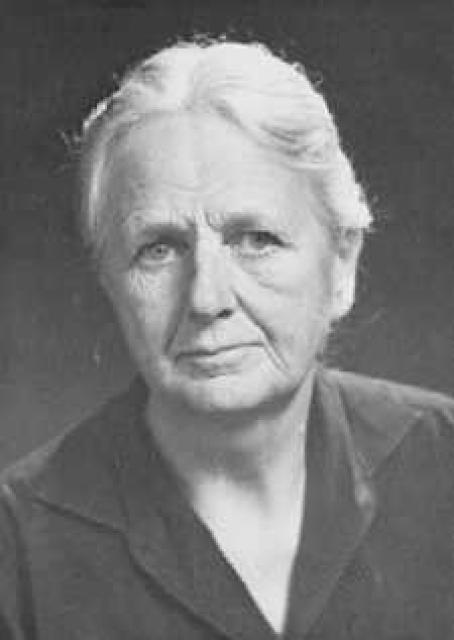
In 1925, Joan married economist Austin Robinson. In 1937, she became a lecturer in economics at the University of Cambridge. It was during her time at Cambridge that she influenced many students, including Dr. Manmohan Singh, who later became the 14th Prime Minister of India. Singh credited Robinson and Nicholas Kaldor as influential teachers who helped him realize the role of politics in shaping human relationships.
Originally a supporter of neoclassical economics, Robinson's views shifted after her acquaintance with John Maynard Keynes. As a member of the "Cambridge school," she made significant contributions to supporting and interpreting Keynesian theory. Robinson particularly focused on the implications of employment and authored several works on the subject in 1936-1937.
In 1933, Robinson introduced the term "monopsony" in her book on imperfect competition. She used this term to describe a market situation where there is only one buyer and multiple sellers. She also utilized the concept of monopsony to explain the wage gap between men and women with equal productivity.
Robinson's interest in Marxist economics was reignited in 1942 when she wrote an essay on the subject. During World War II, she served on various committees for the British government and visited the Soviet Union and China, displaying her interest in underdeveloped and developing countries.
In 1948, Robinson became the first economist to specialize in the Monopolies and Mergers Commission. A year later, she declined an invitation from Ragnar Frisch to become the vice-president of the Econometric Society, stating that she could not be part of the editorial committee of a journal she could not read.
In 1956, Robinson published her seminal work, "The Accumulation of Capital," which played a significant role in expanding Keynesian economic theory for the long term. In 1962, she presented her work "Essays in the Theory of Economic Growth," which introduced the concept of the "golden age" trajectory of economic growth in collaboration with Nicholas Kaldor.
Towards the end of her life, Robinson focused on methodological problems in economics and attempted to restore the original meaning of Keynes' general theory. Between 1962 and 1980, she wrote numerous books on economics, presenting them in a format accessible to a wide audience. She proposed an alternative to the revival of classical economics.
Joan Robinson passed away on August 5, 1983, in Cambridge, leaving behind a legacy of influential work in economic theory and her dedication to understanding and addressing economic issues.