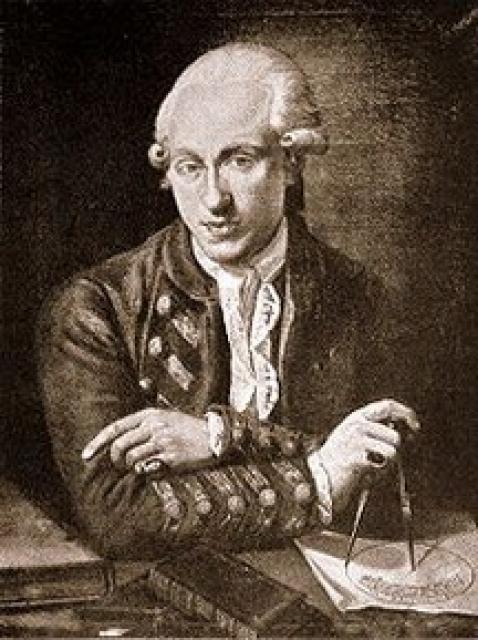
Johann Gottfried Walther
 Germany
- Johann Gottfried Walther: A Musical Luminary
- Influence and Intellectual Development
- Weimar Years and Friendship with Bach
- Unfulfilled Ambitions and Musical Legacy
- The "Musical Lexicon": A Monumental Contribution
- Musical Compositions
Johann Gottfried Walther: A Musical Luminary
Formative Years and Musical EducationJohann Gottfried Walther, a prominent German musician, was born and raised in Erfurt. He received his musical training under the tutelage of Johann Bernhard Bach, Johann Andreas Herbst, and other renowned German musicians. In 1702, he assumed the role of organist at the Church of St. Thomas in Erfurt.
Simultaneously, Walther pursued philosophical and legal studies at the University of Erfurt. However, his passion for music eventually led him to abandon these pursuits. Between 1703 and 1707, he embarked on a musical journey, encountering leading musicians and seeking further instruction in composition and organ performance.
Influence and Intellectual Development
During his travels, Walther crossed paths with Andreas Werckmeister in Halberstadt in 1704. Werckmeister shared with him a copy of his "Pleiades Harmonica" and subsequently exchanged letters, providing him with new compositions, including works by Dieterich Buxtehude. The writings of Werckmeister, along with philosophical treatises by Robert Fludd and Athanasius Kircher, profoundly shaped Walther's intellectual outlook.
Weimar Years and Friendship with Bach
From 1707 until his passing, Walther held the post of organist at the Church of Saints Peter and Paul in Weimar. It was during this tenure that he forged a close friendship with Johann Sebastian Bach, his distant relative by marriage. Walther served as the godfather to Bach's eldest son and instructed the hereditary prince in musical composition from 1712 to 1715.
Unfulfilled Ambitions and Musical Legacy
Despite repeated attempts, Walther was never able to secure the position of cantor in Weimar. The reasons for this remain obscure. Financial hardships accompanied him throughout his life. Nonetheless, Walther's legacy lies in his seminal work, the "Musicalisches Lexicon, oder Musicalische Bibliothec" (1732).
The "Musical Lexicon": A Monumental Contribution
This comprehensive encyclopedia, spanning 659 pages, was the first of its kind in German music. With meticulous care, Walther compiled 3000 musical terms and 200 composer biographies, meticulously arranged alphabetically. The "Musical Lexicon" remains an invaluable source for understanding the evolution of music and musical scholarship in the 17th and early 18th centuries.
Musical Compositions
Walther's musical output primarily consists of organ works for the Protestant church, particularly chorale preludes. Heavily influenced by Bach's compositional style, these works showcase Walther's mastery of complex polyphony and intricate ornamentation.