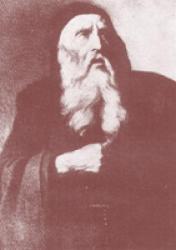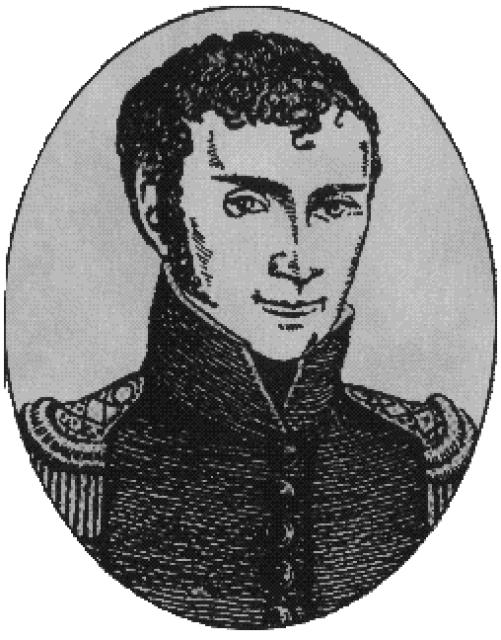
Johann Wilhelm Ritter
 Germany
- Biography of Johann Wilhelm Ritter
- Scientific Discoveries
- Academic Career and Contributions
- Ritter passed away at a young age of 33 in Munich.
Biography of Johann Wilhelm Ritter
Johann Wilhelm Ritter was a German chemist, physicist, and romantic philosopher. He was born in Gauanau, Silesia (now Hoynów, Poland) and was the son of a Protestant pastor. Ritter studied at the University of Jena and became part of the circle of influential figures such as Goethe, A. von Humboldt, Novalis, Brentano, and Schelling, who highly esteemed him. Novalis once said, "Ritter is a knight, and we are just squires," cleverly playing with his friend's last name, which means "knight" in German. Ritter also had a close friendship and collaboration with Ersted.
Scientific Discoveries
Ritter made several significant discoveries in the fields of electrochemistry and ultraviolet radiation. In 1800, he discovered the possibility of galvanic coating and was the first to obtain hydrogen and oxygen through the electrolysis of water. In 1801, he predicted the existence of thermoelectricity. In the same year, using a prism, Ritter conducted experiments to investigate the chemical effects of different sections of the light spectrum. As a result, he discovered that the darkening of silver chloride increased from the red to the violet end of the spectrum and reached its maximum beyond it. This led to the discovery of ultraviolet rays, which was crucial for the development of photographic processes.
In 1803, Ritter effectively invented the electric storage battery. He created a column made of silver discs with wet cloth placed between them and passed a current through it from a voltaic pile. As a result, the column itself began to behave as a source of electricity. The Italian scientist Alessandro Volta explained this effect in 1805. Ritter's experiments are considered the foundation of scientific electrochemistry.
Academic Career and Contributions
Despite not holding an academic degree, Ritter gave lectures on physics at the University of Jena. In 1805, he moved to Munich and was appointed as a member of the Bavarian Academy of Sciences the same year. Ritter became fascinated with experiments on muscle and sensory organ stimulation using electricity and the study of plant electrophysiology. His achievements in these areas were largely associated with experiments conducted on his own body, including those with very high voltages. It is believed that these experiments undermined Ritter's health.