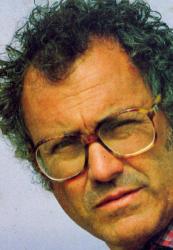
John Clare
 Great Britain
John Clare Biography
John Clare, an English peasant poet, celebrated the traditional English village and mourned its disappearance. By the end of the 20th century, attitudes towards his poetry had changed, and he is now considered one of the greatest English poets of the 19th century. His biographer, Jonathan Bate, believes that Clare was "the greatest working-class poet in English history. No one wrote stronger verses about nature, about childhood spent in the village, and about the alienation and instability of one's self."
Early Life and Poetry
Clare began writing poetry inspired by the works of James Thomson. One of his poems caught the eye of a local bookseller who tracked down the author and introduced him to publishers. Clare's first collection of poems, "Poems Descriptive of Rural Life and Scenery" (1820), depicting rural life and landscapes, was a great success. He traveled to London, where he met literary celebrities. Several English lords purchased a house for him and provided him with a lifelong pension, but Clare never fully adapted to his new way of life.
Later Life and Legacy
Clare published three more books, with his last, "The Rural Muse" (1835), considered the best. Despite this, Clare's family lived in poverty. He developed a drinking problem, which severely affected his health, and he became intolerant of certain sounds. From 1837, apart from a short period in 1841, he rarely left his home at the Northamptonshire Asylum, where he continued to write poetry and created his most famous poem, "I am." Clare was buried in Helpston.
Clare's poetry encompasses descriptions of the nature he loved and understood, along with a simple philosophy full of faith and mild melancholy. Forgotten for over half a century, Clare's poetry experienced a resurgence of interest in the early 20th century, initially from critics and symbolist poets, and later from readers. A two-volume edition of his works was published in 1935, and in 2003, a complete edition of his works in nine volumes was completed. Robert Graves and John Ashbery acknowledged the influence of Clare's poetry. English playwright Edward Bond wrote a drama about the poet called "The Lunatic" in 1975. Clare's character appears in Derek Walcott's poem cycle "Omeros" (1996).
In 1981, the John Clare Society was established in Helpston, and in 1989, a plaque with his name was placed in the Poets' Corner of Westminster Abbey.