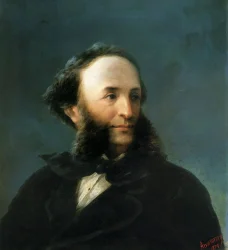
John D. Rockefeller Jr.
John D. Rockefeller Jr. inherited one of the largest fortunes in the United States and spent much of his life directing it toward civic, educational and cultural projects. His gifts helped shape New York City, preserve historic sites and expand national parks. Yet his public reputation was also marked by the 1914 Ludlow Massacre, when guards at a Colorado mine company in which he was the principal owner attacked a striking miners’ camp.
Family and early career
Rockefeller was born in Cleveland, Ohio, on January 29, 1874, the only son of John D. Rockefeller, founder of Standard Oil, and Laura Spelman Rockefeller. After graduating from Brown University in 1897, he joined his father’s office and worked alongside the family’s business and philanthropic advisers. He married Abby Greene Aldrich in 1901. They had six children: Abby, John D. III, Nelson, Laurance, Winthrop and David.
He inherited not only great wealth but also a belief that it carried public obligations. Rockefeller helped establish institutions including the Rockefeller Institute for Medical Research, the General Education Board and the Rockefeller Foundation. After 1910, he devoted most of his attention to philanthropy and civic projects rather than a conventional business career.
Ludlow and labor relations
The most painful crisis of Rockefeller’s public life began with a strike at the Colorado Fuel and Iron Company, in which his family had a controlling interest and he was its principal shareholder. Miners sought union recognition and better wages and living conditions. After months of conflict, the Colorado National Guard and company guards attacked the miners’ tent colony at Ludlow on April 20, 1914. Eleven children and two women died in a fire that swept through the camp. The massacre triggered national outrage, and Rockefeller faced intense scrutiny for the company’s labor practices.
Rockefeller defended the company before a federal commission, where his statements were challenged by labor representatives and reformers. In the aftermath, he worked with industrial relations adviser William Lyon Mackenzie King to establish an employee representation plan at the company. It created channels for workers to raise concerns but operated under company auspices, and labor advocates criticized it as a substitute for independent union representation. The episode pushed Rockefeller toward more formal engagement with labor relations, but it never erased the consequences of Ludlow or his responsibility as a powerful owner.
Philanthropy and civic projects
Rockefeller’s charitable work covered education, health, religious institutions, conservation, international cooperation and historic preservation. He funded Rockefeller Center in Manhattan, whose construction during the Great Depression provided work for tens of thousands of people. He helped restore Colonial Williamsburg in Virginia and donated the land in Manhattan where the United Nations headquarters was built. His support for parks and conservation included significant gifts of land and money to Acadia, Grand Teton, Great Smoky Mountains and other national parks.
His philanthropy was shaped by a personal ethic of stewardship and a preference for large, coordinated projects. Those gifts created lasting public institutions and spaces, while also giving the Rockefeller family a role in deciding which causes and places would receive private wealth.
After Abby died in 1948, Rockefeller married Martha Baird Allen in 1951. He died in Tucson, Arizona, on May 11, 1960. His legacy remains substantial but complicated: he used a vast inherited fortune to build institutions and preserve places that millions still use, while the Ludlow tragedy exposed how philanthropy and corporate power could coexist in the same life.