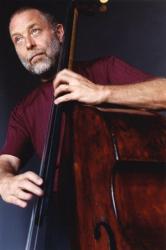
John (Dizzy) Birks (Gillespie)
 USA
USA- Dizzy Gillespie: The Jazz Trumpeter
- Early Life and Musical Education
- The Early Career: From Frank Fairfax to Teddy Hill
- The Bebop Era and Gillespie's Contributions
- Arranging and Collaborations
- The Dizzy Gillespie Orchestra
- The Latin Jazz Pioneer
- Later Years and Legacy
Dizzy Gillespie: The Jazz Trumpeter
John Birks Gillespie, better known as Dizzy Gillespie, was an American jazz trumpeter known as the "King of 52nd Street." He was famous for his wild behavior and eccentric antics. On stage, Gillespie was a sight to behold, comically puffing out his cheeks and producing mind-blowing sounds from his trumpet that would send the audience into a frenzy. He was a master showman, a lover of photography, and a true entertainer.

Early Life and Musical Education
John Birks Gillespie was born on October 21, 1917, in Cheraw, South Carolina. He was the ninth child in his family and received his first music lessons from his father, a bricklayer who played piano in a local orchestra. After his father's death, Gillespie taught himself to play the trombone and trumpet. He played in his school orchestra and later attended Laurinburg Institute in North Carolina, where he studied music theory.
The Early Career: From Frank Fairfax to Teddy Hill
In 1935, Gillespie left his studies and moved to Philadelphia, where he soon found professional engagement in Frank Fairfax's orchestra. It was in Fairfax's orchestra that Gillespie's eccentric behavior and playful antics during rehearsals and performances earned him the nickname "Dizzy." In 1937, he moved to New York City and after several gigs with different bands, he joined Teddy Hill's orchestra as a replacement for the trumpet player Roy Eldridge, whom Gillespie idolized. It was Hill who gave him the nickname "Dizzy" for his "dizzying" playing style.
The Bebop Era and Gillespie's Contributions
During his time with Hill's orchestra, Gillespie made his first recording (the composition "King Porter Stomp") and went on a tour to France, marking his first performances abroad. Two years later, he joined Cab Calloway's orchestra, one of the most popular big bands at the time. While working with Calloway, Gillespie also played in jazz clubs such as Minton's Playhouse and Clark Monroe's Uptown House, where he collaborated with jazz legends Charlie Parker, Kenny Clarke, Charlie Christian, and Thelonious Monk and contributed to the development of a new style of jazz known as "bebop." Unlike the prevailing swing music, bebop was not intended for dancing and featured complex harmonies, unpredictable solos, and unexpected pauses and accents.
Arranging and Collaborations
During this time, Gillespie also began working as an arranger, fulfilling requests from band leaders such as Woody Herman and Tommy Dorsey. After a falling out with Calloway, he worked with Ella Fitzgerald, Lucky Millinder, Benny Carter, Charlie Barnet, Les Hite, and many others. In late 1942, Gillespie briefly joined Earl Hines's orchestra, where he played alongside notable jazz musicians such as saxophonist Charlie Parker and vocalists Billy Eckstine and Sarah Vaughan. After the orchestra disbanded, Gillespie performed with small jazz ensembles, collaborated with swing-era saxophonist Coleman Hawkins, and recorded several sessions with his colleague Charlie Parker. It was during this period that he composed his most famous tunes, including "Salt Peanuts," "Groovin' High," "Hot House," "Woody'n You," and "Dizzy Atmosphere."
The Dizzy Gillespie Orchestra
In 1945, after a brief collaboration with Billy Eckstine's big band, Gillespie formed his first orchestra, which unfortunately didn't gain much popularity among jazz audiences. However, his second attempt to form a big band in 1946 was much more successful. The Gillespie orchestra, featuring future jazz stars such as Milt Jackson, Kenny Clarke, James Moody, Yusef Lateef, J.J. Johnson, and a young John Coltrane, embarked on a successful European tour and operated until 1950.
The Latin Jazz Pioneer
Starting in the late 1940s, Gillespie began experimenting with Afro-Cuban and Latin American rhythms, becoming a prominent advocate and popularizer of a music style that later became known as "Latin jazz." After the dissolution of his orchestra, Gillespie mainly worked with small ensembles, toured with producer Norman Granz's "Jazz at the Philharmonic," and led recording sessions with Stan Getz, Gerry Mulligan, and Sonny Rollins. In 1956, at the request of Congressman Adam Clayton Powell, Gillespie reassembled a big band that toured the Middle East, Europe, and Africa under the sponsorship of the U.S. State Department.
Later Years and Legacy
In the early 1970s, Gillespie joined the "Giants of Jazz" group, which included Art Blakey, Thelonious Monk, Sonny Stitt, and Kai Winding. Throughout his long and illustrious career, Gillespie remained consistently popular and was a sought-after performer at major jazz festivals. Despite a gradual decline in his trumpet playing abilities in his later years, he continued to be not only one of the most popular jazz performers but also a teacher and mentor to younger generations of musicians who found inspiration in his music. Dizzy Gillespie passed away, leaving a lasting legacy in the world of jazz, on January 6, 1993.