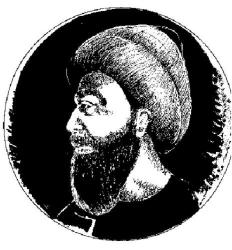
John Elliott Cairnes
 Great Britain
- Biography of John Elliott Cairnes
- Academic Career
- Contributions to Economic Theory
- Other Writings
- Legacy
Biography of John Elliott Cairnes
Early Life and EducationJohn Elliott Cairnes was an influential English economist born in County Louth, Ireland. He was educated at Trinity College Dublin, where he developed a passion for economics and philosophy.
Academic Career
After graduating, Cairnes became a professor of political economy at Trinity College Dublin. He later taught at Queen's College Galway and University College London. As an academic, Cairnes was known for his rigorous methodology and deep understanding of economic principles.
Contributions to Economic Theory
Cairnes was a leading figure in the classical school of economics. He defended the deductive method of research, arguing that economic laws could be derived from self-evident principles. In his influential work "The Character and Logical Method of Political Economy" (1857), he provided a robust justification for this approach.
In his treatise "Some Leading Principles of Political Economy Newly Explained" (1874), Cairnes sought to defend the wage fund theory, which held that wages were determined by the amount of capital available for hiring labor. He also developed an independent theory of industrial crises, similar to the ideas of Rodbertus-Jagetzow.
Other Writings
Beyond his economic treatises, Cairnes also wrote extensively on political issues. His work "The Slave Power" (1862-1863) was a staunch critique of slavery in the United States. He also published influential essays on political theory, such as "Essays on Political Economy Theoretical and Applied" (1873) and "Political Essays" (1873).
Legacy
Cairnes's contributions to economic thought earned him international acclaim. He was a respected figure in both Europe and the United States. His work continues to be studied and debated by economists today, highlighting his enduring influence on the field.