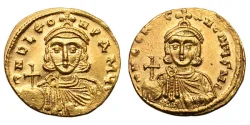
John III Doukas Vatatzes
John III Doukas Vatatzes was the emperor of Nicaea who turned a precarious Byzantine successor state into the strongest power in the eastern Mediterranean. Ruling from 1222 to 1254, he expanded his territory, strengthened its economy and prepared the ground for the recovery of Constantinople from Latin rule. Although he did not live to see the city retaken, his reign brought the displaced Byzantine court closer to that goal.
A new emperor in Nicaea
John was born around 1192, probably in Thrace. In 1212 he married Irene Laskarina, daughter of Theodore I Laskaris, founder and emperor of the Nicaean state. After Theodore’s death in 1222, John succeeded him, though rival claimants from the Laskaris family challenged his right to rule. He defeated their supporters and secured the throne.
The Empire of Nicaea had emerged after the Fourth Crusade captured Constantinople in 1204 and established a Latin empire there. The Byzantine court and church hierarchy continued in exile at Nicaea, in northwestern Anatolia. John inherited a realm that had to defend itself against both the Latin rulers in Constantinople and rival Greek states.
Expanding the Nicaean state
John strengthened Nicaea’s position through diplomacy and military campaigns. In 1224, his forces defeated a Latin army at Poimanenon and pushed Latin rule out of much of Asia Minor. He later expanded Nicaean influence into Thrace and, after the decline of the rival empire of Thessalonica, gained Thessalonica and territory in Macedonia in 1246.
The emperor’s ambitions were balanced by diplomacy with neighboring powers, including Bulgaria and the Holy Roman Empire. His alliance with Frederick II of Hohenstaufen was reinforced by the marriage of John’s son Theodore to Frederick’s daughter Constance. These shifting partnerships helped Nicaea manage threats while continuing to press its claim to Constantinople.
John also worked to strengthen the state’s resources. Byzantine accounts praise his attention to agriculture, domestic production and the welfare of ordinary people. A stable economic base supported the army and helped fund the administration that made Nicaea a serious contender for restoring Byzantine rule.
Legacy
John died in 1254 and was succeeded by his son, Theodore II. His grandson, John IV, was still a child when Michael VIII Palaiologos took Constantinople in 1261, ending the Latin Empire. The recovery came only a few years after John’s death, but it depended on the military and political foundations he had built.
Later Orthodox tradition honored John as a saint and remembered him as a just ruler. His legacy rests on a careful combination of statecraft, expansion and economic consolidation: under his leadership, Nicaea became more than a refuge for the Byzantine court and emerged as the power best positioned to reclaim the imperial capital.