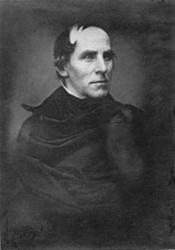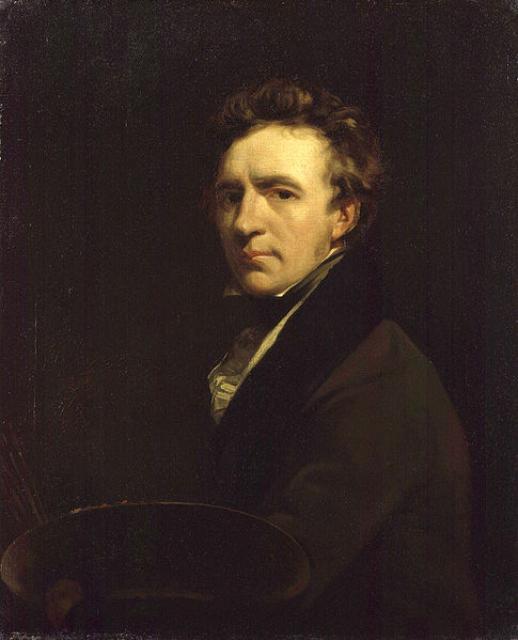
John Jackson
 Great Britain
- Early Life and Influences
- Education and Connections
- Transition to Oil Painting and Renowned Portraits
- European Travels and Inspiration
- Personal Life and Legacy
Early Life and Influences
John Jackson, an acclaimed English artist, was born in Lastingham, Yorkshire, in 1807. Despite his father's disapproval, Jackson's artistic talents emerged at a young age. With the patronage of Henry Phipps, 1st Earl of Mulgrave, Jackson gained recognition by painting portraits for notable figures such as the Earl of Carlisle and Sir George Beaumont.
Education and Connections
Through the support of Sir George Beaumont, Jackson enrolled at the Royal Academy Schools, where he established valuable connections with fellow artists David Wilkie and B. R. Haydon. He also spent significant time at Castle Howard, studying the artworks in the Earl of Carlisle's collection and honing his skills in watercolor painting.
Transition to Oil Painting and Renowned Portraits
By 1807, Jackson had established himself as an accomplished portraitist. He effortlessly transitioned to oil painting, further solidifying his reputation. His notable works included portraits of the Duke of Wellington, Sir John Franklin, and distinguished clergymen. One of his most famous creations was the portrait of Lady Dover, wife of George Agar-Ellis, 1st Baron Dover.
European Travels and Inspiration
Jackson's travels in 1816 to the Netherlands and Flanders, and in 1819 to Switzerland, Italy, and Venice, greatly influenced his artistic style. He drew inspiration from the works of Thomas Lawrence and Henry Raeburn. During his travels, he painted a remarkable portrait of Antonio Canova and became a member of the Academy of St Luke.
Personal Life and Legacy
John Jackson was married twice, first to the daughter of a jeweler and later to Matilda, the daughter of artist James Ward. He passed away on 1 June 1831, in St John's Wood, London, leaving behind a significant legacy in the world of portraiture.