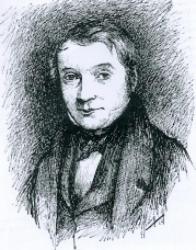
John McConnell Black
 Great Britain
- John McConnell Black: A Life Dedicated to Botany and Linguistics
- Linguistic Acumen
- Immigration to Australia and Marriage
- Botanical Explorations and Publications
- Academic Recognition
- Legacy and Enduring Impact
John McConnell Black: A Life Dedicated to Botany and Linguistics
Early Life and EducationBorn on April 28, 1855, in Wigtown, Scotland, John McConnell Black exhibited a keen interest in both plants and languages from a young age. He received his early education at Wigtown Academy, Edinburgh Academy, Taunton College, and a commercial trade school in Dresden, Germany.
Linguistic Acumen
Black possessed a remarkable aptitude for languages. His notebooks and journals contained writings in Arabic, French, German, Italian, Russian, and Spanish, demonstrating his fluency in multiple tongues.
Immigration to Australia and Marriage
In 1877, Black emigrated to South Australia with his widowed mother, sister, and brother. He married Alice Denford, who shared his passion for botany, on September 11, 1879. The couple welcomed a daughter and three sons.
Botanical Explorations and Publications
Following travels to South America and Europe, Black devoted his efforts to plant taxonomy, particularly after the passing of his mother in 1903. In 1909, he published "The Naturalised Flora of South Australia." His seminal work, "The Flora of South Australia," was published in four volumes between 1922 and 1929. It comprehensively described 2430 plant species native to and naturalized in the region.
Academic Recognition
Black made significant contributions to botany, describing numerous new plant species. In 1927, he was appointed Honorary Lecturer in Plant Taxonomy at the University of Adelaide.
Legacy and Enduring Impact
John McConnell Black passed away on December 2, 1951, at his home in North Adelaide. His specialization in ferns and seed plants left an enduring mark on the field of botany. His meticulously detailed descriptions and taxonomic insights continue to inform researchers and inspire future generations of plant enthusiasts.