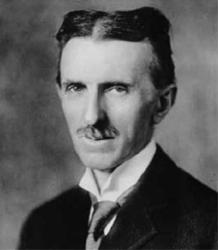
John Shriffer
 USA
USA- Early Life and Academic Journey
- Pioneering Research on Superconductivity
- Bardeen-Cooper-Schrieffer (BCS) Theory
- Nobel Prize and Legacy
- Later Career and Recognition
- Personal Life
Early Life and Academic Journey
John Robert Schrieffer was born on May 31, 1931, in Oak Park, Illinois, to John G. and Louise (née Anderson) Schrieffer. In 1940, his family relocated to Manhasset, New York, and then to Eustis, Florida, nine years later.
After graduating from Eustis High School in 1949, Schrieffer enrolled at the Massachusetts Institute of Technology, intending to become an electrical engineer. Two years later, he switched his major to physics and earned his bachelor's degree in 1953. In 1954, he received his M.S. degree from the University of Illinois with a thesis on the electrical conductivity of semiconductor surfaces, supervised by acclaimed solid-state physicist John Bardeen.
Pioneering Research on Superconductivity
Following his master's work, Schrieffer joined Bardeen in investigating superconductivity and its properties near absolute zero (-273°C). In 1911, Dutch physicist Heike Kamerlingh Onnes discovered that certain materials lose their electrical resistance when cooled to temperatures just a few degrees above absolute zero. This phenomenon, known as superconductivity, was unexpected and remained largely unexplained for nearly 50 years.
Schrieffer and Bardeen studied the role of conduction electrons and atomic vibrations in superconductivity. In 1956, Leon N. Cooper, a postdoctoral fellow at the University of Illinois, proved that interactions between conduction electrons could lead to the formation of bound pairs of electrons, called Cooper pairs.
Bardeen-Cooper-Schrieffer (BCS) Theory
Schrieffer and Bardeen extended Cooper's idea to the behavior of the vast majority of free electrons in a superconducting solid, proposing that they move in unison. This led to the Bardeen-Cooper-Schrieffer (BCS) theory.
The BCS theory showed that the interaction between Cooper pairs unifies the motion of many free electrons in the superconducting material. Below a critical temperature, the pairing force holding the electrons in unison is stronger than the thermal vibrations of the metal atoms. Disturbances that could deflect a single electron and create electrical resistance cannot do so without affecting all the electrons participating in the superconducting state. This makes such an event highly improbable, allowing superconducting electrons to drift coherently without energy loss.
Nobel Prize and Legacy
Schrieffer, Cooper, and Bardeen were awarded the Nobel Prize in Physics in 1972 for "their jointly developed theory of superconductivity, usually called the BCS-theory." The BCS theory remains one of the most significant achievements in theoretical physics since quantum theory.
Schrieffer's work on superconductivity profoundly impacted both theoretical physics and technology. It led to the development of superconductors capable of operating at higher temperatures or in the presence of strong magnetic fields. These superconductors play a crucial role in creating powerful magnets with minimal energy consumption, used in nuclear fusion research, high-energy particle acceleration, magnetic levitation, and biological and physical studies.
Later Career and Recognition
In addition to his Nobel Prize, Schrieffer received numerous accolades, including the National Academy of Sciences' Comstock Prize (1968), the American Physical Society's Oliver Buckley Prize in Solid State Physics (1968), and the American Society of Swedish Engineers' John Ericsson Medal (1976).
Schrieffer taught at the University of Chicago, the University of Illinois, the University of Pennsylvania, Cornell University, and the University of California, Santa Barbara. He actively engaged in research on the magnetic properties of materials, alloys, and surface effects.
Personal Life
Schrieffer married Anne Grete Thomsen in 1960, whom he met while doing postdoctoral research in Copenhagen. They had two daughters and a son. Schrieffer was known for his sharp wit and quick sarcasm.