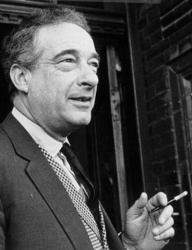
Jon Rose
 Australia
Biography of John Rose
John Rose, an Australian violinist, has been at the forefront of new, improvisational, experimental music for over 35 years. Widely educated, he feels comfortable working on major projects in the field of media arts, such as playing the violin on concert stages. One of his central projects is 'The Relative Violin', a unique and content-rich work that embodies almost everything the violin and string music as a whole are capable of. His most famous project worldwide is considered to be the 'Fence project', thanks to violins specially created for and in Australia.

Early Life and Education
John Rose was born in 1951 in Rochester, UK. He began playing the violin at the age of 7, winning a music scholarship to King's School in Rochester. He studied under Anthony Saltmarsh and completed his formal musical education by the age of 15, mostly self-taught since then. Throughout the 1970s, first in England and then from 1976 in Australia, Rose played, composed, and studied a wide variety of genres, ranging from guitar playing to country and western music, from creating contemporary classical music to commercial studio sessions, from bebop to Italian club bands, from big band music to sound installations. In 1977-1978, he studied jazz arrangements and counterpoint with Bill Motzing at the Sydney Conservatorium of Music.

Career
Rose became a key and most well-known figure in the development of free improvisation and sound art in Australia, performing in almost every art gallery, jazz club, or rock club as a soloist or with fellow improvisers such as Rik Rue, Louis Burdett, and Jim Denley, as well as with an international team of improvising performers called 'The Relative Band'. In 1977, he launched the first Australian touring music collective, 'Fringe Benefit', to promote and record improvisational music. In 1983, their joint LP 'Tango' with Martin Wesley-Smith was released on 'Hot Records', the world's first combination of sampling and violin improvisation. In 1986, he moved to Berlin to fully realize his ongoing project 'The Relative Violin', which had been ongoing for a quarter of a century, leading Rose to experiment with designing new instruments and instrumental methods, sometimes testing them in continuous marathon concerts lasting up to 12 hours, using analog, built-in violin electronics, and interactive electronics.
Rose has more than 30 major international productions for the world's largest radio stations, concert recordings, video, and television projects under his belt. He performs over 50 concerts a year as part of group and solo projects in North America, Japan, Australia, South America, China, Scandinavia, and almost all European countries. Rose also curates 'String 'em up', his own festival dedicated to innovative use of string instruments, which took place in Berlin in 1998, Rotterdam in 1999, New York in 2000, and Paris in 2002. In addition, he participates in numerous music festivals, from 'Ars Electronica' to the Berlin Jazz Festival.
In addition to over sixty recordings, Rose is the author of two books, 'The Pink Violin' and 'Violin Music in the Age of Shopping', both published in Melbourne. In 2000, he formed the duo 'Temperament' with pianist Veryan Weston, and his other current projects include 'Australia Ad Lib', an innovative website documenting the stages of development of Australian alternative music. In 2003, John Rose returned to Australia.