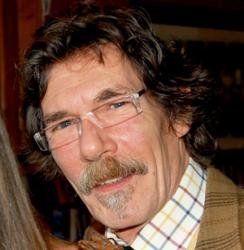
Joni Mitchell
 Canada
Biography of Joni Mitchell
Joni Mitchell, a Canadian folk-rock singer-songwriter, guitarist, and pianist, was born Roberta Joan Anderson on November 7, 1943, in Alberta, Canada. While studying graphic arts at the Alberta College of Art, Joni Mitchell developed an interest in the guitar, and soon she was performing with a local folk group whose compositions gained some popularity.
In 1965, Joni Mitchell moved to Toronto, where she became a sensation among musicians and listeners who were passionate about folk-rock. It was during this time that she married folk singer Chuck Mitchell, but their marriage ended after a year when the couple moved to Detroit. America warmly welcomed Joni Mitchell's melodic compositions, and in 1967, she signed a contract with the major label Reprise Records. Most of her early songs became hits when performed by other musicians such as Judy Collins' rendition of "Both Sides Now," Tom Rush's version of "The Circle Game," Crosby, Stills & Nash's recording of "Woodstock," and Ian Matthew's Southern Comfort's cover of her song "Eastern Rain." Collins also included Joni Mitchell's "Michael From Mountains" on one of her albums, and the English folk-rock band Fairport Convention recorded "Eastern Rain." All of this contributed to Joni Mitchell's debut album being met with great enthusiasm. Her second album achieved even greater success, and her third album quickly went "gold," with the single "Big Yellow Taxi" reaching the 11th spot on the charts in England.
Critics warmly received her 1971 album "Blue," which featured three hits: "Carey," "My Old Man," and "The Last Times I Saw Richard." However, her best-selling album was the 1974 release "Court and Spark," which included the hit single "Help Me" (reaching 7th place in the US). Departing from traditional folk-rock, Joni Mitchell succeeded in creating a complex work that could be loosely categorized as "continental acoustic pop-rock." The style of this album largely determined the concept of Joni Mitchell's subsequent work, which increasingly incorporated elements of jazz. As part of her live performances, the artist began to collaborate with the jazz-fusion group L.A. Express.
Released in 1975, the album "The Hissing of Summer Lawns" represented an unusual experiment on the boundary between rock and musical postmodernism. Although it received recognition from only a few serious musicologists, the album was criticized by reviewers, which affected its commercial success. A similar fate befell her next album. However, having acquired a taste for experimentation, Joni Mitchell could no longer stop. First, she introduced African drums into her compositions, and then she made her lyrics so intricate that they became allusions to themes understood only by the author.
In 1978, the exceptional bassist and composer Charles Mingus joined Joni Mitchell's band, but their collaboration was short-lived as Mingus soon died from hepatitis. Joni Mitchell wrote lyrics to his music and released the album "Mingus" in 1979. The next live album featured bassist from Weather Report, Jaco Pastorius, and renowned jazz guitarist Pat Metheny. In 1982, Joni Mitchell finally achieved success with the pop-oriented album "Wild Things Run Fast." Her 1985 album had a jazz influence but was well-received by both the public and critics. Her next work, the album "Night Ride Home," reached the Top 10 in the US. In the 90s, Joni Mitchell leaned towards simpler forms of music and intimate venues, but she remained a cult figure in the contemporary rock scene.