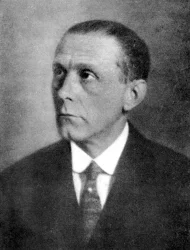
Joseph Roth
Joseph Roth was born on September 2, 1894, in Brody, a Galician town on the eastern edge of Austria-Hungary, now in Ukraine. He grew up in a largely Jewish community and wrote in German, the language that became his lasting home as the empire of his childhood disappeared. A gifted reporter as well as a novelist, Roth turned the upheavals of the twentieth century into intimate stories of people stranded between old loyalties and new political realities.
From Galicia to the Newsroom
Roth studied literature and philosophy in Lwów and Vienna, but the First World War disrupted his university life. He served in the Austro-Hungarian army, and the experience of war and the empire’s collapse shaped much of his writing. After the war he began working as a journalist, first in Vienna and then in Berlin, where he became a highly regarded correspondent for leading German-language newspapers.
His reports ranged across politics, city life, travel, and the experience of people displaced by war and revolution. Roth’s sharp eye for ordinary detail made his feuilletons—short literary essays and dispatches—popular with readers. He brought that same restless attention to early novels such as “Hotel Savoy” (1924), whose travelers and veterans move through a Europe that no longer offers them a stable place.
The Lost World of the Habsburgs
Roth wrote about Jewish life in eastern Europe in “The Wandering Jews” (1927) and created a moving portrait of a Jewish family in “Job” (1930). His best-known novel, “The Radetzky March” (1932), follows three generations of the Trotta family as the Habsburg monarchy approaches its end. Rather than simply celebrating the empire, the book shows the fragility, ritual, and human cost of a political order in decline.
In the 1930s Roth increasingly mourned the vanished monarchy, especially as nationalism and fascism gained ground. This nostalgia became a prominent feature of his public outlook, though his fiction remained alert to the contradictions of imperial life. When the Nazis came to power in Germany in 1933, Roth left the country and settled into a precarious life of exile, moving among European cities before spending his final years mainly in Paris. His work was banned in Germany, but he continued to write novels, essays, and newspaper pieces.
A Writer in Exile
Roth’s private life was marked by instability and grief. His wife, Friederike Reichler, became seriously mentally ill and was institutionalized; the couple’s separation and her later murder by the Nazi regime weighed heavily on him. He also struggled with alcoholism, even as he continued to produce an immense body of work. Friends, including the writer Stefan Zweig, offered support, while Roth’s letters reveal a voice capable of wit, tenderness, and despair.
He died in Paris on May 27, 1939, aged 44, after years of declining health. His grave bears the description “Austrian writer—died in exile,” a concise summary of the rupture that defined his life. Roth’s novels and journalism endure because they give the fall of empires a human scale: his characters are not only witnesses to history but people trying to find a home after the world they knew has vanished.