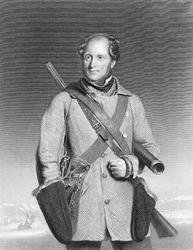
Juan Rodriguez Cabrillo
 Spain
Spain- Juan Rodríguez Cabrillo: Conquistador and Explorer
- Origins and Early Years
- Military Exploits
- The 1542 Expedition
- Death and Legacy
- Historic Heritage
Juan Rodríguez Cabrillo: Conquistador and Explorer
Juan Rodríguez Cabrillo, a renowned conquistador and explorer, made significant contributions to Spanish exploration and colonization efforts. Despite the scarcity of documented information about his early life, his legacy as a pioneer remains firmly etched in history.
Origins and Early Years
Cabrillo's origins remain a subject of debate among historians. The most prevalent theory, supported by Spanish historian Antonio de Herrera, suggests a Portuguese lineage. However, this notion has been challenged by modern scholars who favor the possibility of Castilian descent.
Military Exploits
Cabrillo's military career commenced with his participation in the conquest of Cuba and Mexico under the command of Hernán Cortés. He played a crucial role in the defeat of the Aztec Empire at Tenochtitlán in 1521. Subsequently, alongside Pedro de Alvarado, he assisted in the conquest of present-day Guatemala, Honduras, and El Salvador.
The 1542 Expedition
In 1542, Cabrillo led an armada consisting of the ships "San Salvador" and "Victoria" on an expedition to locate the fabled Strait of Anián. The armada set sail from the port of Navidad (present-day Acapulco) on September 3. After reaching the southern tip of the Baja California peninsula, the ships entered San Diego Bay on September 28. Continuing northward along the coast, the expedition explored as far as 40° N latitude (present-day Cape Mendocino) before turning back. During the expedition, Cabrillo established contact with the Chumash tribe.
Death and Legacy
During an encounter with Native Americans, Cabrillo sustained injuries that ultimately led to his demise. He passed away on the island of Santa Catalina. The official account of Cabrillo's expedition was lost, leaving only a brief summary compiled by fellow explorer Andrés de Urdaneta, who had access to the ship's logs and maps. The location of Cabrillo's burial remains unknown.
Historic Heritage
In recognition of Cabrillo's pioneering exploits, the Cabrillo National Monument was established in 1913 at Point Loma, where he first landed on the Baja California peninsula. In 1939, a monument sculpted by Portuguese artist Alvaro de Bree was erected in his honor. This site offers panoramic views of San Diego Bay, a testament to the enduring legacy of Juan Rodríguez Cabrillo.