Julie O'Connor
 Great Britain
- Tragic Loss: Julie O'Connor's Battle with Cervical Cancer
- A Devastating Truth
- Campaign for Accountability
- History of Errors
- Official Response
- Cervical Cancer Awareness
- Risk Factors
Tragic Loss: Julie O'Connor's Battle with Cervical Cancer
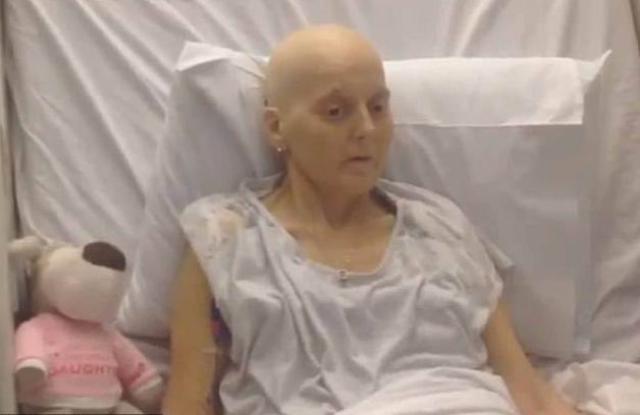
Negligence and MisdiagnosisJulie O'Connor, a 49-year-old mother of two, passed away in February 2019 from cervical cancer, despite multiple screenings that had supposedly cleared her of the disease. Before her death, she recorded a heartbreaking message condemning healthcare professionals for their gross errors that cost her her life.
Her husband, Kevin, who served as the camera operator, voiced over the recording, accusing a string of doctors of failing to diagnose his wife's condition for three years. "We believe there is culpability," he stated. "Both the laboratory pathologist and the gynecologist—who had multiple opportunities to make a difference... I hold them responsible, as well as the board of directors of North Bristol Trust."
A Devastating Truth
O'Connor passed away in a Bristol hospice mere days after the filming. She had been repeatedly assured that she was clear of cervical cancer based on smear tests, biopsies, and multiple examinations. It was only after three years that the truth emerged—the cancer had reached an advanced stage.
Campaign for Accountability
Julie's family, convinced that other women with cancer may have suffered from similar negligence, is now campaigning for independent cervical cancer screening at Southmead Hospital. "We don't think this is an isolated case," Kevin said. "We think it's probably a systemic cultural issue. One person cannot be that unlucky that the smears, the biopsies, and the examinations all failed multiple times continuously. We are now talking to the senior members of staff."
"We have to move forwards, but we have to look back to try and find out if there are other victims. That's what Julie wanted." To get to the bottom of the matter, Kevin has initiated an independent public inquiry. "The NHS failed my wife," he added. "As a result of that, we have had to go private. We just don't want anyone else to go through what Julie has."
History of Errors
Julie O'Connor's first smear test, in September 2014, showed negative results. However, an independent analysis conducted later revealed signs of cervical cancer. A year later, she experienced frequent bleeding, prompting her GP to request further investigation. Over the next two years, Julie was repeatedly told by doctors that she was cancer-free. The ordeal continued until 2017, when she decided to see a private consultant.
"Within literally ten seconds, the consultant gynecologist said, 'How on earth was this missed?'" her husband recalled. "He said it was a 4.5-centimeter tumor; he managed to do a hysteroscopy with great difficulty."
Kevin continued, "North Bristol Trust failed her badly, and they need to look at their procedures today. Are there other victims? These were serious, fundamental failures of screening, and we just want to save other women."
Official Response
North Bristol Trust has commissioned an independent review, acknowledged the failures in the system, and stated that solicitors are now handling the matter.
Dr. Chris Burton, the trust's medical director, said, "We are extremely sorry for the death of Mrs. O'Connor."
"We offer our deepest condolences. As part of our commitment to improving our services, we are keen to understand the full circumstances of what happened and to share the findings of our independent investigation publicly. I have met with Mr. O'Connor and will continue to keep contact with him."
Cervical Cancer Awareness
Women in the UK between the ages of 25 and 49 are invited for cervical screening every three years, while those aged 50 to 64 are invited every two years. The screenings aim to detect abnormal cells that have the potential to develop into cancer. This has led to at least 2,000 fewer deaths from cervical cancer each year in the UK.
However, the National Audit Office reported last month that only a third of patients receive their test results within the recommended three-week period. For some, the anxious wait stretches to four months. Approximately five million women in the UK are overdue for screening.
Risk Factors
Cervical cancer is a type of cancer that develops in the neck of the womb (cervix). The most common symptom is bleeding, such as between periods, during sex, or after menopause. Other signs include pain during sex, unpleasant-smelling vaginal discharge, and pelvic pain.
Research suggests that being overweight or obese can double the risk of developing cervical cancer. Excess body fat leads to increased levels of estrogen, a hormone that may play a role in the development of cervical cancer.
Other risk factors include infections with the human papillomavirus (HPV), smoking (21% of cases), taking the contraceptive pill (10% of cases), and pregnancy.
Since 2008, girls aged 12-13 have been offered the human papillomavirus (HPV) vaccine, which is approximately 70% effective in preventing cervical cancer.
Treatment depends on a patient's overall health, the stage of the cancer, and whether or not it has spread to other parts of the body. Surgery, usually involving removal of the womb and the cervix, may be required. In some cases, less invasive surgery is possible, allowing the patient to have children in the future. For more advanced cases, a combination of chemotherapy, radiotherapy, and surgery may be necessary.