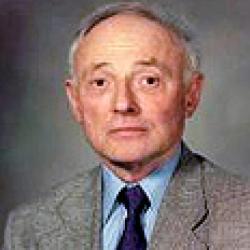
Karen Uhlenbeck
 USA
USA- Birth and Education
- Marriage and Career Struggles
- Fellowships and Positions
- Contributions to Geometry and Analysis
- Advocacy for Women in Mathematics
- Awards and Recognition
- Conclusion
Birth and Education
Karen Uhlenbeck, born Karen Keskulla on August 24, 1942, in Cleveland, Ohio, is an American mathematician who has made significant contributions to geometric analysis. She earned her bachelor's degree from the University of Michigan in 1964. Her postgraduate studies began at the Courant Institute of Mathematical Sciences at New York University.
Marriage and Career Struggles
In 1965, Karen married biophysicist Olke Uhlenbeck, the son of physicist George Uhlenbeck. Following her husband's move to Harvard, Karen resumed her studies at Brandeis University, where she received her master's degree in 1966 and her Ph.D. in 1968. Her doctoral dissertation, supervised by Richard Palais, was titled "Calculus of Variations and Global Analysis."
Fellowships and Positions
Despite her qualifications, Uhlenbeck faced challenges finding a permanent academic position near her husband due to anti-nepotism rules. She held temporary appointments at Massachusetts Institute of Technology and the University of California, Berkeley. In 1971, she joined the faculty of the University of Illinois at Urbana-Champaign but moved to the University of Illinois at Chicago in 1976. She later joined the University of Chicago in 1983, and in 1988, she moved to the University of Texas at Austin, where she currently holds the title of Professor Emeritus of Mathematics.
Contributions to Geometry and Analysis
Uhlenbeck is recognized as a pioneer in geometric analysis, which uses differential geometry to study solutions to differential equations and vice versa. She made significant contributions to topological quantum field theory and integrable systems. In the early 1980s, Uhlenbeck and Jonathan Sacks introduced a calculus used to study the singularities of harmonic maps and smooth local solutions of the Yang-Mills-Higgs equations in gauge theory.
In geometric analysis, Uhlenbeck initiated the systematic study of the moduli theory of minimal surfaces in hyperbolic three-manifolds in her 1983 paper "Closed Minimal Surfaces in Three-Manifolds."
Advocacy for Women in Mathematics
Uhlenbeck is also a strong advocate for women in mathematics. She co-founded the Park City Mathematics Institute (PCMI) in 1991, which provides immersive learning and professional development opportunities for math teachers and researchers. She also co-founded the Women and Mathematics program and the Institute for Advanced Study.
Awards and Recognition
In 2019, Uhlenbeck became the first woman to receive the prestigious Abel Prize in Mathematics. She was also a recipient of the National Medal of Science (2000) and the AMS Steele Prize for Seminal Contribution to Research (2007). She is a member of several prestigious academic institutions, including the American Mathematical Society, the National Academy of Sciences, and the London Mathematical Society.
Conclusion
Karen Uhlenbeck is a towering figure in the world of mathematics whose groundbreaking work has advanced our understanding of geometry and analysis. Her unyielding perseverance and advocacy for women in mathematics have left a lasting legacy on the field and have been an inspiration to generations of mathematicians.