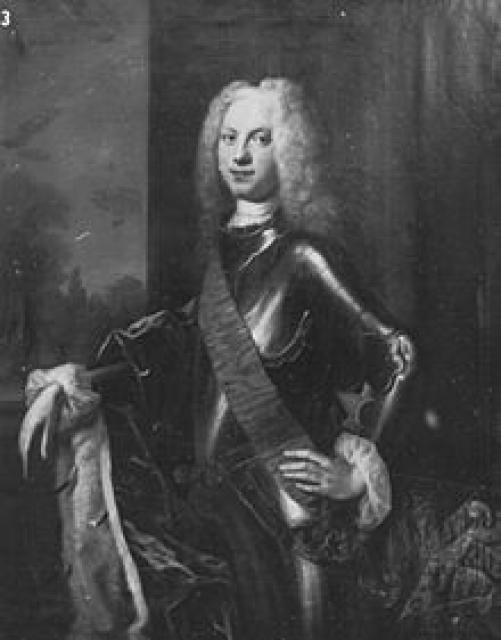
Karl Avgust
 Germany
- Biography of Karl August
- Early Military Service
- Return to Weimar
- Return to Weimar and Austrian Campaign
- Service in the Russian Army
- Later Life and Legacy
Biography of Karl August
Karl August of Saxe-Weimar-Eisenach was a prominent figure in German history. Born into the ruling family of Saxe-Weimar, he was the son of Duke Constantine. Despite the early loss of his father, Karl August received a splendid education and attended several universities in Germany.
Early Military Service
As the sovereign ruler of a small principality, Karl August aligned himself with Austria and became a supporter of the Austrian cause. In 1788, he joined the Prussian army as a Major General and served in the garrison of Amölsleben. During the Austro-Prussian War in 1790, he fought in Silesia as part of the Prussian army. In 1793, he participated in battles on the Rhine and in the Palatinate.
Return to Weimar
In 1794, Karl August resigned from Prussian service and returned to Weimar. It was during this time that his son married Grand Duchess Maria Pavlovna. However, in 1805, Weimar was occupied by French forces, forcing Karl August to join the Prussian army once again. He fought in the battles of Jena and Auerstedt, where he was captured.
Return to Weimar and Austrian Campaign
After his release, Karl August returned to Weimar, which became part of the Confederation of the Rhine. In 1809, he secretly traveled to Austria and participated in the battles of Aspern and Wagram. After the war, he returned to his homeland once again.
Service in the Russian Army
In March 1813, Karl August joined the Russian-Prussian army and fought in the battles of Lützen, Bautzen, and Reichenbach. On June 1, 1813, he rejoined the Russian service as a Lieutenant General and served under the commander of the 1st Cuirassier Division. He participated in battles at Dresden, Pirna, Kulm, and Leipzig. In early 1814, he was given command of a 30,000-strong corps, which operated in the Netherlands. In 1814, he fought in battles at Brienne, Laon, Fer-Champenoise, and Paris.
Later Life and Legacy
As a result of the decisions made at the Congress of Vienna, Saxe-Weimar became the Grand Duchy of Saxe-Weimar-Eisenach on August 2, 1815. Karl August returned to Weimar and assumed the ducal throne. He remained in Russian service until his death, retaining his position as a general. Karl August's contributions to both military and political affairs left a lasting impact on the history of Germany.