Karl Lessing
 Germany
Biography of Karl Lessing
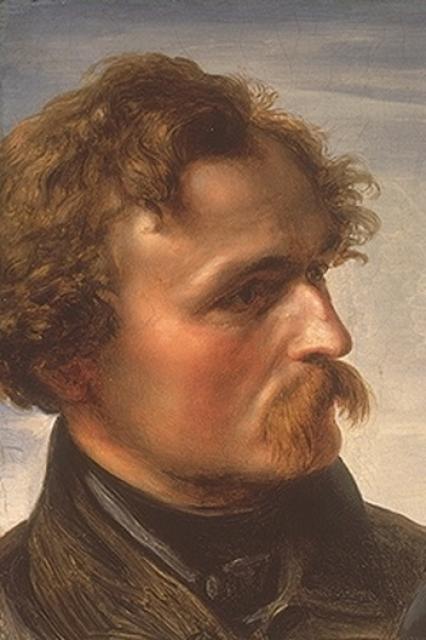
Karl Friedrich Lessing was a German painter and artist of the Romantic movement. He was the nephew of the famous poet and playwright Gotthold Ephraim Lessing. Born into a family of judicial officials in the dwarf Silesian state of Wartenberg (now Syców), Lessing spent his childhood in the idyllic regions of Silesia with its ancient towns, castles, and dense forests. It was during these formative years that his love for nature and the history of his homeland awakened.
At the age of 14, Lessing moved to Berlin, where he studied under Karl Friedrich Schinkel at the Academy of Architecture. In 1823, against his parents' wishes, he decided to become an artist and studied at the Berlin Academy of Arts from 1823 to 1826. He then enrolled in the Düsseldorf Academy of Arts alongside his friend F.W. von Schadow.
Lessing's first major success came in 1825 with his painting "Churchyard with Tombs and Ruins under the Snow," which received positive reviews from critics and was successfully sold at an exhibition in Berlin. This event reconciled Lessing with his father, who initially disapproved of his son's professional choice.
During the first half of his artistic career, Lessing primarily painted melancholic and romantic landscapes in the style of Caspar David Friedrich. He also created paintings based on literary and legendary subjects. As a landscape artist, he achieved great success, skillfully expressing the beauty of German forests and the rugged cliffs of the Harz Mountains and Eifel region. Reproductions of Lessing's paintings were frequently published in numerous German magazines during the 19th century.
Later in his career, Lessing turned to historical themes, and from 1832 to 1867, he almost exclusively painted historical canvases. For example, upon the request of Count von Spee, Lessing adorned his castle Helfort near Düsseldorf with frescoes depicting the life of Frederick Barbarossa. Lessing belonged to the Düsseldorf School of Painting and became a member of the Berlin Academy in 1832. In 1848, he was granted the title of professor by the Prussian king. He was also awarded the Order "Pour le Mérite" by Prussia, as well as numerous other German and international orders and medals. Lessing was a member of various German and foreign academies and artistic societies.