Karl Shenk
 Switzerland
- Karl Schenk: A Legendary Swiss Politician and Statesman
- Pastoral and Marriage
- Political Career
- Swiss Red Cross
- Federal Council and Presidency
- Ministerial Roles
- Vice-Presidency
- Legacy
Karl Schenk: A Legendary Swiss Politician and Statesman
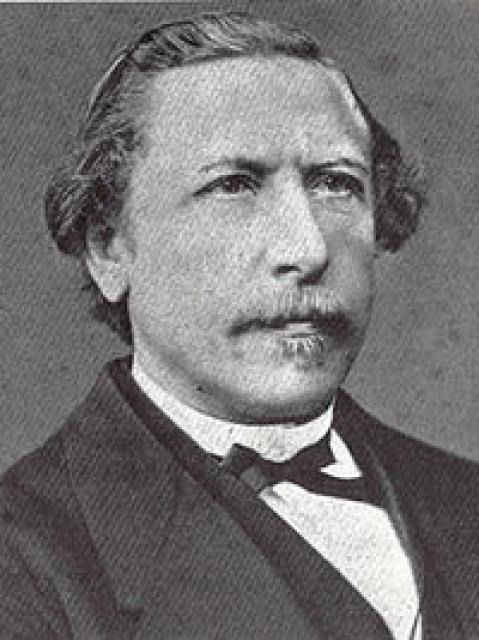
Early Life and EducationKarl Schenk was born on February 1, 1823, in Bern, Switzerland, to Christian and Verena Schenk. Tragically, he became an orphan at the tender age of 11 and was raised in Korntal, Germany. In 1839, he returned to his hometown and attended school until 1842. Subsequently, he pursued theological and philosophical studies at the University of Bern.
Pastoral and Marriage
Ordained as a pastor in 1845, Schenk served in Schüpfen, where he married Elise Kähr in 1848. Their union brought forth nine children, two of whom sadly passed away in infancy.
Political Career
Bernese ParliamentSchenk's political journey began in 1855 when he was elected to the Grand Council of the Canton of Bern, prompting him to relocate to Bern. The following year, he became a member of the Council of Cantons within the federal parliament.
Swiss Red Cross
In 1873, Schenk assumed the leadership of the Swiss Red Cross, succeeding Jakob Dubs as president. He held this esteemed position until 1882.
Federal Council and Presidency
Schenk's exceptional abilities led to his election to the Swiss Federal Council on December 12, 1863. He became President of Switzerland five times during his tenure, serving in 1865, 1871, 1874, 1878, and 1893.
Ministerial Roles
Over the course of his illustrious career, Schenk held various ministerial positions within the Federal Council. He served as head of the Department of the Interior from 1866 to 1870 and again from 1879 to 1886. Additionally, he led the Department of Foreign Affairs in 1865 and 1871.
Vice-Presidency
Schenk's unwavering dedication to Swiss politics earned him four terms as Vice-President, in 1864, 1870, 1873, and 1884.
Legacy
Karl Schenk's profound impact on Swiss society and the development of the Swiss federal state remains undeniable. His leadership and commitment to strengthening the nation's institutions left a lasting legacy. He passed away on July 18, 1895, at the age of 72, leaving behind a remarkable chapter in Swiss history.