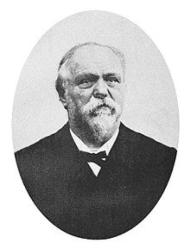
Karlheinz Deschner
 Germany
- Early Life and Education
- Military Service and Return to Education
- Religious Criticism and Literary Career
- Magnum Opus and Recognition
- Awards and Activism
Early Life and Education
Karlheinz Deschner was born on May 23, 1924, in Bamberg, Germany, the eldest son of Catholic lumber-merchant Karl Deschner and Margareta Karoline, a former Protestant. The family lived in a former hunting lodge in the Steigerwald from 1924 until 1964. From 1929-1933, Deschner attended elementary school in Trosselfurt before enrolling in a seminary at a Franciscan monastery in Dettelbach. From 1934-1942, he studied at the Alte, Neue and Deutsche Gymnasium in Bamberg, where he graduated in 1942 and volunteered to serve in the Wehrmacht.
Military Service and Return to Education
During World War II, Deschner fought as a soldier and paratrooper, sustaining multiple injuries. After the war, he studied law, theology, philosophy, and psychology at the University of Munich from 1946-1947. He then moved to the University of Würzburg, where he earned a doctorate in philosophy in 1951 with a dissertation on the poetry of Nikolaus Lenau.
Religious Criticism and Literary Career
In 1956, Deschner published his first novel, "Die Nacht steht um mein Haus." In 1957, he released his debut religious critique, "What do you think about Christianity?" By 1958, he had become a member of the literary criticism group "Kitsch, Konvention und Kunst" and had published the novel "Florence without Sun." In 1962, he published his second work of religious criticism, "Twice the Cock Crowed: A Critical History of the Church."
Magnum Opus and Recognition
In 1970, Deschner began work on his ten-volume "Criminal History of Christianity," which was published by Rowohlt Verlag. The first two volumes appeared in 1986, and the work was supported financially by Alfred Schwarz and Herbert Steffen. In 1989, former Catholic law professor Horst Herrmann praised the work in a review in Der Spiegel. The final volume was published in 2013.
Awards and Activism
Deschner received numerous awards for his work, including the Arno Schmidt Prize (1988), Alternative Büchner Prize (1993), International Humanist Prize (1993), Erwin Fischer Prize (2001), Ludwig Feuerbach Prize (2001), Wolfram von Eschenbach Prize (2004), and Giordano Bruno Literary Prize (2006). He was also elected a foreign member of the Serbian Academy of Sciences and Arts in 2006.
Deschner was a committed vegetarian and advocate for animal rights, stating that if he had to live life again, he would devote himself to their cause instead of fighting against Christianity. He believed that those who left the church were "rays of hope" and that "those who do not eat animals are my brother."