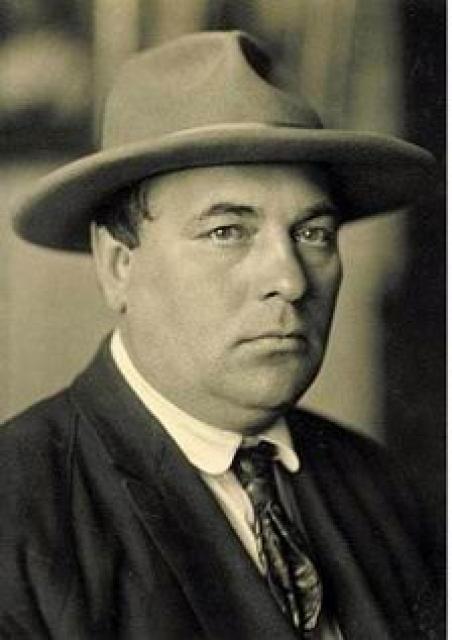
Karlis Zale
- Karl Zale: A Master of Monumental Sculpture
- Education and Artistic Development
- Involvement in the Monumental Propaganda Plan
- Early Works and the Return to Latvia
- The Riga Brother Cemetery Ensemble
- The Monument of Freedom
Karl Zale: A Master of Monumental Sculpture
Karl Zale, a Latvian sculptor, was a pioneer of monumental sculpture in his homeland. His artistic journey began in 1913 when he graduated from the renowned Kazan Art School in Russia.
Education and Artistic Development
After completing his studies in Kazan, Zale continued his education in St. Petersburg at the School of the Society for the Encouragement of Artists. He also studied under renowned painter G.R. Zaleman and graduated in 1915. In 1917, he enrolled in the Imperial Academy of Arts, where he trained under Professor A.T. Matveev.
Involvement in the Monumental Propaganda Plan
During his stay in Petrograd (now St. Petersburg), Zale collaborated with Ernst Stahlberg, who would later become his frequent collaborator. Together, they participated in the implementation of Lenin's plan for monumental propaganda. The plan aimed to transform Petrograd's memorial landscape, replacing old monuments with new ones reflecting the ideals of the Soviet republic.
Early Works and the Return to Latvia
Zale created sculptures of Nikolai Dobrolyubov and Giuseppe Garibaldi during this period. However, these works were made of perishable materials and have not survived. In 1919, he designed a sketch for a monument to revolutionaries in Riga.
After the establishment of independent Latvia, Zale returned to his homeland in 1923. He was warmly welcomed by the Latvian art community and commissioned with numerous significant projects.
The Riga Brother Cemetery Ensemble
From 1924 to 1936, Zale focused on creating the monumental ensemble of the Riga Brother Cemetery. He collaborated with architect Alexander Birznieks on this project. The ensemble included various memorial structures made of limestone tuff, travertine, and sandstone.
The Monument of Freedom
The centerpiece of this period was the Monument of Freedom, which was inaugurated in 1935. Sculpted by Zale and designed by Stahlberg, the monument commemorates the Latvian struggle for independence. The 42-meter-high sculpture features the iconic figure of Mother Latvia, a symbol of the country's strength and resilience.





