
Kate Horman
 Australia
Biography of Kate Horman
Kate Horman, an Australian lawyer and blogger, is a survivor of anorexia. For a long time, anorexia was believed to be solely a psychological illness, but recently scientists suspected that the physiological factors of anorexia cannot be ignored. Australian researchers are conducting studies to determine if there are specific genes in anorexic individuals and if they can be helped on a purely chemical level. Attempts to stop the spread of anorexia worldwide have been made for a long time, although the effectiveness of the fight against this psychological problem has not been significant.

A new approach was recently taken to solve the problem - victims of anorexia were asked to donate blood for analysis. Scientists hope that studying blood samples will allow them to better understand the origin of the disease and identify factors that contribute to its development. Some preliminary findings have already been made - there are indications of genetic links, and a peak susceptibility to anorexia among women during puberty and menopause has long been observed. If the analysis helps to discover something new, it could be a breakthrough in the fight against anorexia, especially considering that there are currently around 53,000 people suffering from the disease in Australia alone. Among those who are willing to donate their blood for research is 27-year-old Australian lawyer and blogger, Kate Horman.

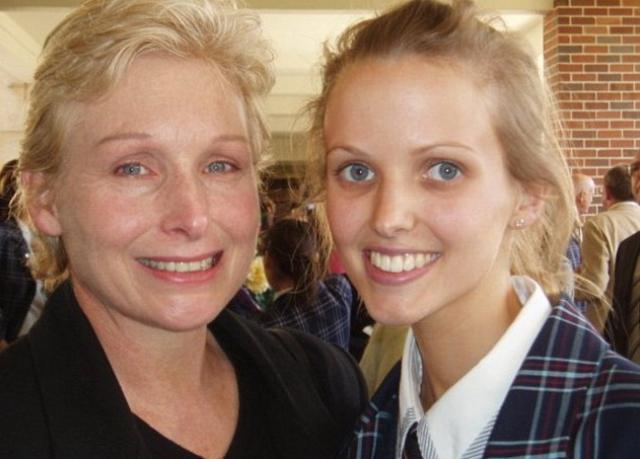
Kate is all too familiar with anorexia; she struggled with eating problems for about 10 years until she decided to change her life in a radical way. Kate began tormenting herself at the age of 17. She excluded entire food groups from her diet, consumed up to 20 laxative servings per day, and eventually started starving herself. This extreme behavior had a noticeable and nightmarish effect - Kate's weight dropped to 30 kilograms. Naturally, such cruel treatment of her own body could not avoid catastrophic consequences. Kate's hair started falling out, she constantly felt incredibly tired, and she was always cold. She lacked energy, easily became irritable or fell into depression. Sleeping was the only thing that Kate was able to do well, and even that stopped providing the expected relief at a certain point. Kate's self-destructive behavior brought her dangerously close to a critical level, but fortunately, there was someone who cared. Her own mother saved Kate from inevitable self-destruction. Her mother cared for and looked after her wayward daughter, and at a certain point, such care became vital for Kate, as she regularly fainted and her cognitive functions deteriorated. Her mother subconsciously expected each fainting episode to be the last, but luckily, it never happened.
Recent research has shown that anorexia is somewhat contagious; people living with those affected by the disease are likely to develop it themselves. Whether this is due to psychological influence or genetic predisposition is still unclear, although more and more experts are leaning towards the latter possibility. Solving this mystery could radically change the essence of the disease's treatment. Currently, effective procedures and medications to combat anorexia remain elusive. By studying possible genetic markers that contribute to the development of anorexia, scientists hope to develop new treatment methods.

Kate Horman attributes her own anorexia to a combination of various factors. Her father's departure from the family when she was just 11 played a role, as did her difficult childhood, which, combined with her "perfectionist syndrome," contributed to a dangerous neurosis. At the age of 15, during the normal process of puberty, Kate gained some weight. This often happens to teenage girls, but in Kate's case, it was not excessive. However, her grandmother sent her a rather unpleasant letter criticizing Kate's appearance, which had a significant impact on the young girl. As a former student of a prestigious girls' private school, Kate Horman's greatest desire in life was to be popular and loved. After losing a few kilograms, Kate noticed an increase in her popularity - and from that moment on, she went to extremes.
While Kate's story mainly involves psychological factors, leading scientists now believe that physiological causes also play a role in the development of anorexia. Of course, without psychological triggers, such causes are unlikely to provoke the disease, but they cannot be completely ignored. By analyzing a sufficient amount of data, scientists hope to create a "biological profile" of the most likely victims of anorexia. With this profile, the disease can be detected and eradicated at early stages or even prevented. The idea of studying the physiological aspects of the disease arose when scientists thought about the manifestations of hunger in normal people compared to anorexic individuals. The difference was significant. While hunger may cause irritability and restlessness in ordinary individuals, anorexics experience similar impulses during mealtime, and hunger noticeably calms them. Such anomalies are difficult to explain solely through psychology, which is why genetic predisposition to anorexia is being considered. It is possible that the abnormal nervousness experienced by anorexics during meals can be explained by physiological reasons - and, more importantly, can be cured with certain medications. This, of course, will not eliminate external factors that still contribute to the development of the disease, but it will make its progression less severe and the fight against anorexia easier.
Kate Horman is living proof that overcoming the disease is possible through one's own efforts. However, those who lack the strength to fight alone can rely on medical professionals and specialized medications and treatments.


