Khaliq and Rahim Abdul
 Yemen
Yemen- Yemeni Conjoined Twins, a Tale of Survival and Despair
- Medical Challenges and War-Torn Yemen
- Parents' Plea
- Dire Situation in Yemen
- Global Appeal for Help
- Statistics and Prognosis
- Separation Surgery
- Notable Dicephalus Twins
Yemeni Conjoined Twins, a Tale of Survival and Despair
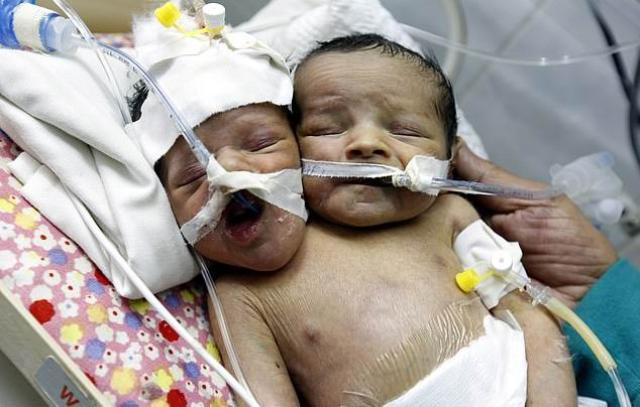
Birth and ConditionBorn in January 2019, Abdel-Khalek and Abdel-Rahim are Yemeni twins with a rare and complex condition known as parapagus dicephalus. Their bodies are fused at the lower neck, each possessing separate hearts, lungs, and spines. Their chances of survival with such an anomaly are slim.
Medical Challenges and War-Torn Yemen
Abdel-Khalek and Abdel-Rahim were born during a time of intense conflict in Yemen. The ongoing civil war has severely impacted healthcare, leaving local doctors overwhelmed and underfunded. The twins' condition requires specialized treatment unavailable in Yemen, necessitating expensive and risky medical evacuation.
Parents' Plea
The twins' father, Akram Ali Ahmed, refuses to contemplate separating them, fearing that only one would survive. "I want my children to be safe," he stated. "I will not rebel against what God has created."
Dire Situation in Yemen
Al-Taurah Hospital Chief Physician Dr. Faisal al-Babli explained the unique challenges in Yemen. "This case has never been encountered before in Yemen — two babies in one body, with two heads, two hearts, two stomachs, and two spines. They only share a pelvis and a pair of arms and legs."
Global Appeal for Help
Dr. al-Babli implored international organizations to assist in providing the twins with proper medical care. "We are reaching out for funding and external support to provide the necessary medical care, evacuate them from Yemen, and save this baby with two heads," he said.
Statistics and Prognosis
According to the American Journal of Medical Genetics, siamese twins occur in approximately 1 in 50,000 to 100,000 births. The survival rate for dicephalus twins is uncertain, but complications related to the heart, lungs, and intestines pose significant risks.
Separation Surgery
Separation surgery may be an option in certain cases, but its success depends on the organs shared by the twins and the skill of the surgeons. However, dicephalus twins sharing a pelvis typically face a low survival rate if separated.
Notable Dicephalus Twins
The Hensel twins, born in 1990, remain the most famous living dicephalus twins today. Their case highlights the unique challenges and complexities of caring for this rare condition.