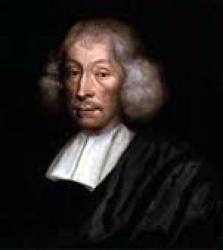
Konrad Gesner
 Switzerland
Biography of Conrad Gesner
Conrad Gesner was a Swiss scientist and encyclopedist known for his contributions to botany and zoology. He was born in Zurich, Switzerland, and was raised by his uncle after his father was killed during the Second Kappel War in 1531. It was his uncle who instilled in him a love for literature and botany.
Gesner's Protestant friends, particularly Heinrich Bullinger, played a crucial role in helping him pursue his education. He studied in Zurich, Basel, Strasbourg, Bourg, Paris, and Montpellier. In 1537, he was elected as a professor of Greek language in Lausanne.
In 1541, Gesner obtained his doctorate in medicine. In 1557, he was appointed as a professor of natural philosophy in Zurich, where he also practiced medicine. He established a Botanical Garden and laid the foundations for the first natural history museum.
Gesner's notable contribution to botany was his attempt to classify plants based on their flower and seed characteristics. He divided the plant kingdom into classes, orders, genera, and species, laying the groundwork for binary nomenclature. His work gained recognition posthumously when his "Opera botanica" was published in Nuremberg in 1754 and 1759. Carl Linnaeus considered Gesner's choice of generative organs of plants (flower, fruit, and seed) as the basis for their classification to be the greatest discovery in botanical science. This principle was subsequently implemented in Linnaean plant taxonomy.
While studying plants, Gesner made thousands of sketches of stems, flowers, and fruits. His constant practice honed his hand and eye coordination, allowing him to achieve great precision in his drawings. By observing the intricate details of organ structures and analyzing color shades, Gesner was able to identify important diagnostic features for species, thus advancing the methods of knowledge acquisition and enhancing the understanding of organography and systematics. His original drawings were less conventional than wood engravings used to illustrate his scientific works.
Apart from his contributions to botany, Gesner made significant contributions to the field of zoology. His most well-known work is "Historia animalium," which he started in 1551. The final volume was published posthumously. Gesner's views as a zoologist influenced Rudolf Jakob Camerarius, Carl Linnaeus, and Georges Cuvier.
His work on comparative linguistics, "Mithridates," had a significant impact and was further developed by Johann Christoph Adelung. Gesner's works have been referenced by Jorge Luis Borges in his fantastical "Bestiary" and his explorations of universal grammar and a universal language.