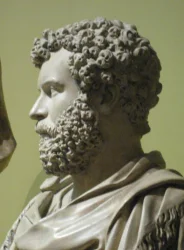
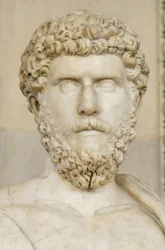
Konstantinos VI
Constantine VI was Byzantine emperor from 780 to 797, though for much of that time his mother, Irene, wielded power as regent or co-ruler. His reign fell at a decisive moment in the empire’s long dispute over religious images: the Second Council of Nicaea restored the veneration of icons in 787. Constantine’s struggle to rule independently ended in his overthrow and blinding by Irene, whose sole reign continued until 802.
A Child Emperor
Constantine was born on January 14, 771, the son of Emperor Leo IV and Irene of Athens. He was proclaimed co-emperor as a young child. When Leo died in 780, Constantine was about nine, and Irene governed in his name. She controlled the court and the army while managing the political and religious divisions that had troubled the empire for decades.
The central dispute concerned the use of religious images, or icons. Earlier emperors had forbidden their veneration, while many church leaders and ordinary believers defended them. Irene favored the restoration of icons and convened a council at Nicaea in 787. Constantine formally participated in the council, which condemned iconoclasm and restored the veneration of sacred images. The settlement was a major religious achievement, although it did not end the controversy permanently.
A Contested Rule
As Constantine grew older, he sought to govern without his mother’s control. A military revolt in 790 temporarily removed Irene from power, but she returned as co-ruler two years later. The resulting arrangement left authority divided at court and repeatedly challenged by rival factions.
Constantine’s rule also faced military setbacks. Campaigns against the Bulgarians and the Abbasid Caliphate produced mixed results, and a serious defeat by the Bulgarians in 792 weakened his standing. Court politics grew more unstable, with the emperor relying on supporters while punishing perceived opponents. These conflicts alienated important groups and gave Irene opportunities to rebuild her influence.
His family life became another source of public dispute. Constantine’s first marriage, to Maria of Amnia, had been arranged during his mother’s regency. In 795 he divorced Maria and married Theodote, a woman from the imperial court. Many church leaders considered the second marriage illegitimate, and the controversy further damaged his support.
Overthrow and Legacy
In 797, Irene’s supporters seized Constantine and blinded him, a violent act that removed him from the throne. Irene then ruled as sole emperor until 802. The exact circumstances and date of Constantine’s death are uncertain; later accounts place it sometime after his overthrow, and he disappears from the political record.
Constantine VI’s reign is difficult to separate from the powerful role his mother played in it. He was emperor in name from childhood, but his periods of independent rule were brief and contested. The restoration of icon veneration at Nicaea became the lasting religious achievement of his era, while his deposition exposed the severe instability at the heart of the Byzantine court.