
Krista Schwab
 USA
Krista Schwab came to public attention through a pregnancy that challenged the grim predictions she had received about her fertility. A resident of Washington State, she has spoken openly about living with uterus didelphys, a congenital condition in which a person has two uterine cavities. Her story drew wide notice because, after years of believing motherhood might not be possible, she became pregnant without fertility treatment.

Learning about her condition
Schwab has said she was diagnosed with uterus didelphys at about 12, after medical complications led to surgery. She later learned that the condition also involved two vaginal canals separated by a partition. In interviews, she described how little she initially knew about the anatomy and how isolating it felt to encounter a rare diagnosis without much information or support.

The experience shaped her expectations about having children. Schwab said she had been warned that pregnancy could be impossible or very difficult, and she and her husband, Courtney, experienced miscarriages. For years, the prospect of building a family remained uncertain.

A surprising pregnancy
In 2017, at age 32, Schwab announced that she was expecting a baby boy. The pregnancy happened spontaneously after she and her husband had considered in vitro fertilization. News coverage described the pregnancy as developing in one of her two uteruses, and reported that she was several months along when the story became widely known.
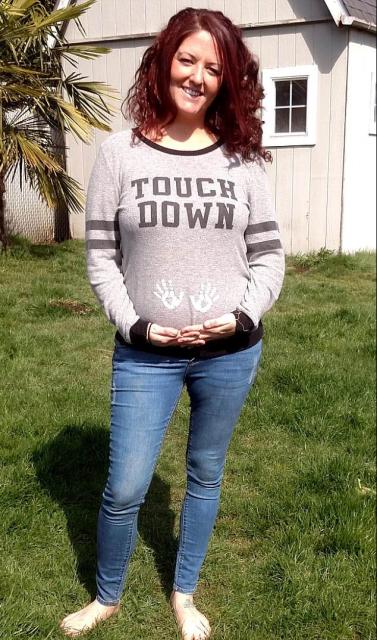
The attention centered on the surprise of the pregnancy and the couple’s long path through disappointment and hope. Schwab used interviews to discuss the emotional strain of being told she might not conceive and the shock of learning that she was pregnant. Her openness made a little-known reproductive condition more visible to a broad audience.
Public voice and perspective
Schwab’s public profile is rooted in sharing a personal experience rather than in entertainment or politics. Her account prompted discussion of uterine anomalies, fertility, and the uncertainty that can accompany medical predictions. Her story also resonated with people facing difficult reproductive diagnoses, offering an example of an outcome that had once seemed unlikely.
Coverage of Schwab has focused mainly on her diagnosis and the 2017 pregnancy. She has helped bring attention to a condition that many people have never heard of, while emphasizing the personal reality behind the headlines: years of uncertainty, the grief of pregnancy loss, and the unexpected possibility of becoming a parent.


