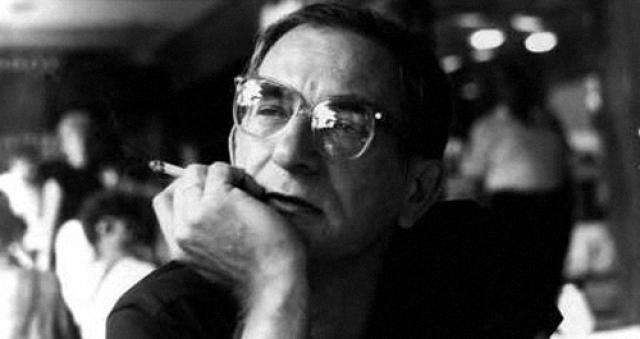
Kshishtof Keslevskiy
 Poland
- Krzysztof Kieślowski: A Cinematic Visionary
- Artistic Maturity
- "Dekalog" and Beyond
- French Interlude and International Acclaim
- Legacy and Influence
Krzysztof Kieślowski: A Cinematic Visionary
Early Life and CareerKrzysztof Kieślowski was born in Warsaw, Poland, on June 27, 1941. Despite his father's debilitating tuberculosis, which forced the family to relocate for treatment, Kieślowski's childhood was formative. He briefly attended firefighting courses before enrolling in a technical college for theater in 1957, where he discovered his passion for filmmaking. After briefly attending, he moved to Łódź and entered the renowned film school that produced luminaries such as Andrzej Wajda and Roman Polanski.
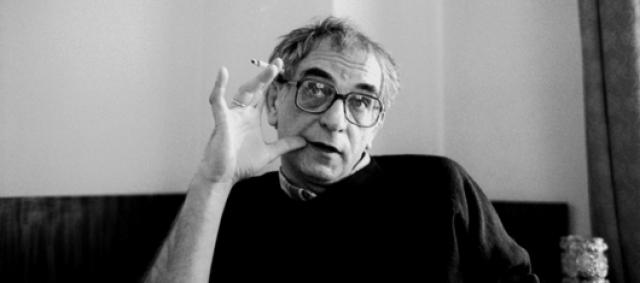
Kieślowski's early career was marked by a shift from theater to cinema. His graduation in 1968 coincided with Poland's cultural liberalization, granting artists greater freedom. He began directing short and documentary films, often depicting the lives of working-class Poles. Despite their non-political nature, Kieślowski's portrayals of Polish society brought him into conflict with authorities.
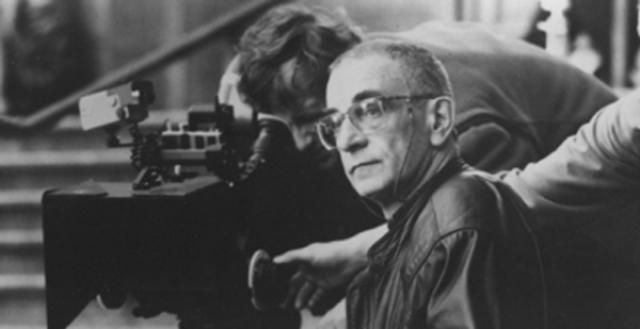
Artistic Maturity
Realizing the limitations of documentary filmmaking under authoritarian rule, Kieślowski turned to feature films. He saw fiction as a more potent and authentic medium for exploring life's complexities. His early works exhibited elements of socialist realism, featuring non-professional actors and focusing on the daily struggles of ordinary people. Films like "The Staff" (1975) and "The Scar" (1976) delved into the corrosive effects of a corrupt system.

In 1979, Kieślowski's "Camera Buff" won an award at the Moscow Film Festival. He joined a group of "free filmmakers," including Agnieszka Holland and Andrzej Wajda, whose works often faced censorship.
"Dekalog" and Beyond
Kieślowski's 1988 masterpiece, "Dekalog," was a departure from his previous social and political concerns. Composed of ten short stories inspired by the Ten Commandments, the film revealed Kieślowski's philosophical and abstract leanings that would dominate his later work.
French Interlude and International Acclaim
Kieślowski's last four films were co-produced in France by Marin Karmitz. They focused on metaphysical and moral themes, continuing the exploration he began in "Dekalog." His late films featured smaller casts, more abstract forms, and a shift from a collective viewpoint to individual spiritual quests. They also presented Poland through the eyes of outsiders, broadening Kieślowski's international reach.
In "The Double Life of Véronique" (1990), Irene Jacob played the iconic role of two women with uncanny similarities. This success paved the way for Kieślowski's most ambitious project, the "Three Colors" trilogy: "Blue" (1993), "White" (1994), and "Red" (1994). The films, unconnected by plot but exploring universal themes, catapulted Kieślowski to the forefront of European cinema. "Blue" won the Golden Lion at the Venice Film Festival, and "White" was nominated for the Golden Bear at the Berlin International Film Festival. "Red" was nominated for an Academy Award, which Kieślowski did not attend. The trilogy introduced actresses Julie Delpy and Juliette Binoche to a wider audience.
Legacy and Influence
Tragically, Krzysztof Kieślowski died suddenly of a heart attack in 1996. He left behind a daughter, Marta, and his wife, Maria. Despite his vow not to make films after the trilogy, Kieślowski had begun pre-production on a project based on Dante's "Divine Comedy," which was posthumously completed by Tom Tykwer ("Paradise") and Damis Tanović ("Hell").
Almost 20 years after his passing, Krzysztof Kieślowski remains one of the most influential and beloved European directors. His films are studied at universities and film schools worldwide. His life and work have been documented in the autobiographical book "Kieślowski on Kieślowski" and Krzysztof Wierzbicki's film "I'm So-So." Kieślowski's legacy continues to inspire generations of filmmakers and cinephiles.


