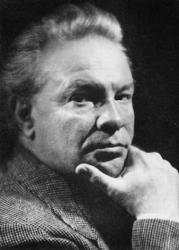
Kurt Weill
 Germany
Biography of Kurt Weill
Kurt Weill was a German composer born in 1900 in Dessau. He gained recognition through his collaboration with Bertolt Brecht, where the two masters developed the style and forms of the so-called "epic theatre" - a theatre with a strong social and critical orientation. Their first major work together was the production of "The Threepenny Opera" (1928), the music of which quickly gained worldwide fame.
Collaboration with Bertolt Brecht
Kurt Weill's partnership with Bertolt Brecht brought him prominence in the world of music. In this union, the two masters developed the style and forms of the so-called "epic theatre" - a theatre with a strong social and critical orientation. Their first major work together was the production of "The Threepenny Opera" (1928), the music of which quickly gained worldwide fame. In 1927, at the festival in Baden-Baden, they staged a sketch called "Mahagonny-Opera". Mahagonny was a city of prosperity and joy that could be bought with money. The only crime punishable by the electric chair was the lack of money. The performance ended in scandal, after which the sketch was reworked into a three-act opera called "The Rise and Fall of the City of Mahagonny" (1930). Brecht's daring play with Weill's aggressive music, emphasizing the sharpness of the text with a vulgar-extravagant melody, gained loud scandalous fame.
Musical Style and Emigration
These plays, aimed against social corruption, caused riots during their performances. Weill attempted to develop new forms of musical theatre, skillfully using contemporary rhythms and resorting to the simplest musical means. In 1933, Weill emigrated to Paris, and in 1935, with the rise of the Nazis to power, he moved to America. Here, he wrote music for Broadway. His anti-war musical play "Johnny Johnson" (1936) became well-known. Through his creativity, Weill contributed to the development of the musical as a new genre. The composer's satirical style includes elements of contemporary popular song, fashionable dances, jazz, and expressionistic harmony. In 1943, Weill became a naturalized citizen of the United States. Some of his most important stage works include "The Protagonist" (1926), "Pale Royale" (1927), "The Threepenny Opera" (1928), "The King Steps Out" (1928), "Happy End" (1929), "The Man Who Says Yes" (1930), "The Rise and Fall of the City of Mahagonny" (1930), "The Seven Deadly Sins" (1932), "One Touch of Venus" (1943), "Street Scene" (1947), "Down in the Valley" (1948), and "Lost in the Stars" (1949).