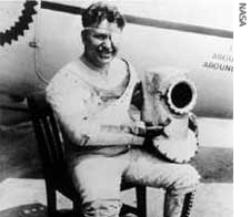
Laszlo Almasy
 Hungary
- Early Life and Education
- Military and Post-War Career
- Automobile Career and Sahara Expeditions
- Research and Discovery
- Tragedy and Legacy
Early Life and Education
László Ede Almásy was born into a Hungarian noble family in Bernstein, Austria (formerly Borostyánkő, Austro-Hungary). His father, György Almásy, was a zoologist and ethnologist. Almásy received his education from a private tutor in Eastbourne, England, and resided at The Burrow, 17 Kerrow Road, Eastbourne, from 1911 to 1914 and again from November 1921 to June 1922.
Military and Post-War Career
During World War I, Almásy served as a pilot in the Austro-Hungarian Air Force. After the war, he returned to Eastbourne and enrolled in the Eastbourne Technical Institute. He was also a member of the first Eastbourne Aero Club. Almásy remained a supporter of Emperor Karl of Austria during the interwar period and made two visits to Budapest to encourage Karl's attempts to reclaim his throne. It is believed that the emperor bestowed upon him an unofficial title of Count, which was used outside of Hungary.
Automobile Career and Sahara Expeditions
After 1921, Almásy worked as a representative for Steyr Automobile in Szombathely, Hungary, and won numerous races for the company. He also organized hunting trips for European visitors to Egypt.
In 1926, Almásy's interest in the Nile region during a trip from Egypt to Sudan drew him back to the area for hunting and driving expeditions. In 1929, he showcased the capabilities of Steyr automobiles in desert conditions by leading his first Sahara expedition with two trucks.
In 1932, Almásy embarked on a quest to find the legendary Zerzura, "the Valley of the Birds," with three Britons: Sir Robert Clayton, Squadron Leader Penderel, and Patrick Clayton. Funded by Prince Kemal el Din, the expedition used both cars and an airplane. They cataloged prehistoric rock art, including the 'Cave of Swimmers' in the Jebel Uweinat and Gilf Kebir. Almásy claimed to have found the third valley of Zerzura in Wadi Talh in 1933.
Research and Discovery
Almásy evolved from an amateur to a serious explorer. His Bedouin friends gave him the nickname Abu Ramla, meaning "Father of the Sands." However, by the mid-1930s, his time for exploration and adventure was drawing to a close.
Tragedy and Legacy
In 1932, Almásy's sponsor, Clayton, died from an infection rather than a plane crash as depicted in "The English Patient." Clayton's wife also died a year later (1933) in a mysterious plane crash.
Almásy chronicled his adventures in the book "Az ismeretlen Szahara" (The Unknown Sahara), first published in Budapest in 1934. The German edition, entitled "Unbekannte Sahara. Mit Flugzeug und Auto in der Libyschen Wüste" (The Unknown Sahara. By Aeroplane and Car in the Libyan Desert), was published five years later (1939) by Brockhaus in Leipzig. It contains his most sensational discoveries, such as Jebel Uweinat (the highest mountain in the eastern Sahara Desert), the rock paintings of Gilf Kebir, and the lost oasis of Zerzura.