
Lena Bessoltseva
 Russia
- Biography of Lena Bessoltseva
- The Class of 6 'B'
- The Love and Betrayal
- The Trip to Moscow
- The Cruelty in the Class
- The Victory of Lena Bessoltseva
- The Impact of the Film
Biography of Lena Bessoltseva
Lena Bessoltseva is the main character in the film "Scarecrow". She is a new girl in a quiet provincial town on the banks of the Oka River. She has moved in with her grandfather, Nikolai Nikolaevich (played by Yuri Nikulin), and has become a newcomer at school. At first, the other students treat her normally, without expressing open hostility towards Lena, but they are not eager to welcome her with open arms either.
The Class of 6 'B'
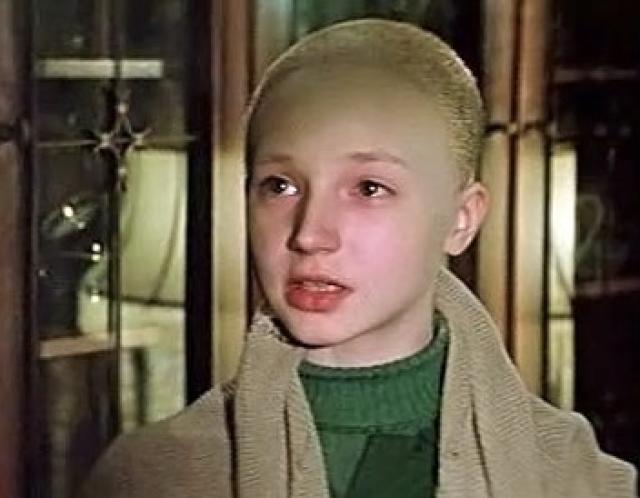
Lena joins Class 6 'B', a group of children who live by their own rules, just like any other children's collective. There is the top student nicknamed "Iron Button," the troublemaker "Shaggy," the first beauty Shmakova, the influential son of wealthy parents Somov, and the quiet one, Vasilev, who goes unnoticed by everyone. Lena is a quiet girl with no ambitions. She knows how to adapt perfectly, which is why she endures the teasing right from the start, smiling and even ingratiating herself a little. By the way, she is teased partly because of her grandfather, who is considered eccentric in the town, and therefore, some responsibility for Nikolai Nikolaevich's eccentricities falls on his granddaughter.

The Love and Betrayal
But Lena manages well. She tries not to get upset even when she is given the hurtful nickname "Scarecrow." Moreover, Lena has already fallen in love - she noticed Dimka Somov right away, and he has yet to discover the lengths the brave newcomer will go for him. Dimka is a cool kid from a good family. He behaves confidently everywhere and can afford to be anyone, as all the girls in school are in love with him. So, when he starts befriending the newcomer, he immediately earns enemies among the girls in the class.
The Trip to Moscow
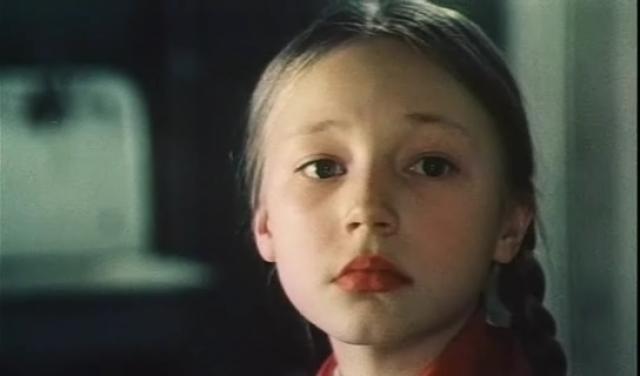
Meanwhile, the class is looking forward to a trip to Moscow. But a missed lesson suddenly puts the trip into question. When the class teacher learned that almost the entire class went to the cinema instead of attending the lesson, she decided to punish "her own" students, and the long-awaited trip to the capital never happened. Girls cried, boys comforted them, and at some point, the question arose: who is the traitor? Who "snitched" about the cinema trip to the teacher? Only three people knew that it was Dimka Somov, the class leader and champion of justice, but two of them had their reasons to stay silent. Lena, who became an unwitting keeper of someone else's secret, couldn't bear it and took the blame herself. She simply couldn't let her classmates call Dimka, her hero, a traitor.
The Cruelty in the Class
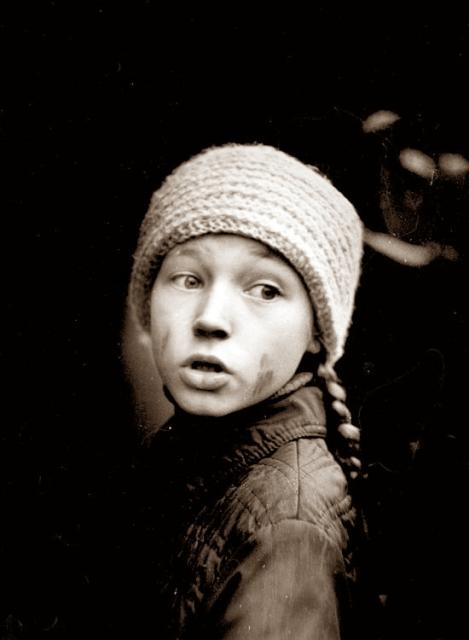
No one, including Lena herself, could have anticipated the non-childish bullying that would ensue in the class. The cruelty with which the children attacked Scarecrow was simply astounding. Ordinary kids, whose childhood was supposed to be spent in the peaceful times, seemed intoxicated, goaded on by each other, they literally pounced on the unfortunate Bessoltseva, who became target number one. Lena held on - she had already taken on someone else's guilt, and there was no turning back. All she could do was wait for the failed trip to Moscow to be forgotten and hope that they would forgive her betrayal. But the children did not calm down, and the climax was the episode with the burning of the scarecrow, onto which Lena's dress was put and the words "Scarecrow the traitor" were written. She was completely alone at that moment, a stranger among strangers, and there was only one person in the world who helped her - her grandfather, the eccentric art collector Nikolai Nikolaevich, who advised her, as best he could, to stay true to the principles of truthfulness, keeping one's word, and that a coward will always remain a coward.
The Victory of Lena Bessoltseva
In the end, everything fell into place - the children found out who had actually "snitched" about the cinema trip, and all the accusations against Lena were dropped. It seemed that she should have been happy with such an outcome - the bullying was over, and her silence and sacrifice even earned her respect in the class. But unfortunately, the decision to leave could not be changed anymore, and on one gloomy day, Lena quietly left the town with her grandfather. Thus, the film ended with Lena's victory. Her cruel classmates realized they were wrong, but there was no joy in this victory, only a bitter aftertaste and thoughts of the injustice of life. Refusing to acknowledge the realism of the film would be impossible for anyone. Those who participated in the film remembered how easy it was to work with 11-year-old Kristina Orbakaite. She didn't act like a diva, she did exactly what the director told her to do, and although she may not have empathized with her character's fate, there was no way to find fault with Kristina's performance. Ultimately, it was because of her that the film turned out to be strong, profound, and incredibly lyrical. It is said that Kristina only said "no" to the director once, when she was asked to shave her head. She cited her mother, Alla Pugacheva, as the reason, so the girl's long hair remained, and a special wig was made on the set to imitate a shaved head.
The Impact of the Film
The film's release was simply explosive - some were outraged by the display of such blatant cruelty, while others applauded its realism. There was simply no one who remained indifferent. By the way, the film's release was not easy - it was almost destined to remain shelved, but Rolan Bykov was persistent and managed to overcome the barriers of Soviet censorship.


