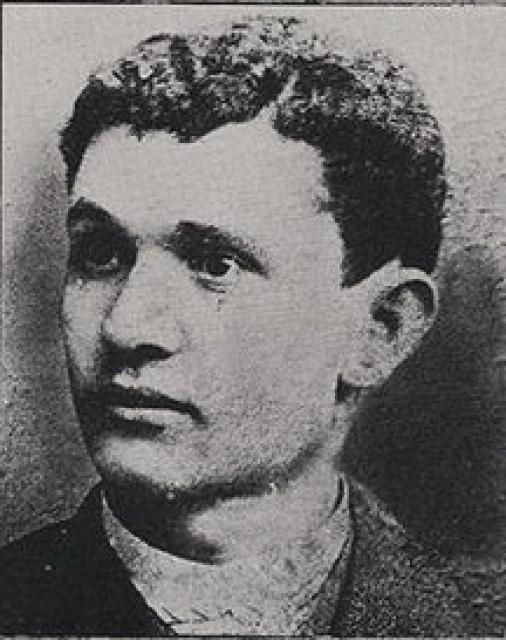
Leon Blanc
 USA
USA- Leon Blank: A Star of Yiddish Theater
- Success in America
- Thalia Theater and Hebrew Actors' Union
- National Theater and Liberty Theater
Leon Blank: A Star of Yiddish Theater
Early Life and CareerLeon Blank, born in Kishinev in 1867, began his theatrical career as a choirboy at a synagogue. At age 15, he joined Zeilik Mogulesko's touring theatrical troupe as a chorister. After the ban on Jewish theater in Russia in 1883, the troupe moved to Romania, where Blank worked in Iași and Bucharest as a full-fledged actor by 1886. His first significant role came in the play "The Crown of King Alexander."
Success in America
In 1886, Blank followed Mogulesko to America, becoming part of the first professional Jewish theater company in the New World. Initially performing at the Union Theatre, Mogulesko later established the Roumanian Opera House in Manhattan, specializing in vaudeville and operettas. Blank gradually rose to prominence as a character actor, playing in Boris Tomashevsky's Arch Street Theatre in Philadelphia and Windsor Theatre in New York. His renowned performance in the play "The Black Wedding Canopy" in 1898 brought him widespread recognition.
Thalia Theater and Hebrew Actors' Union
In the late 1890s, Blank joined Kessler and Feinman's Thalia Theater in the Bowery, where he became its manager for a time. Notable plays he performed in included Jacob Gordin's "God, Man, and Devil" and "The Abnormality, or the Man from the Other World." In 1899, Blank founded the Hebrew Actors' Union, establishing an artist's club at 31 Second Avenue.
National Theater and Liberty Theater
During the following two decades, Blank worked at Tomashevsky's National Theater and the Liberty Theater on the Lower East Side. He performed in plays by Joseph Lateiner, Afrom Sheikevich, Isidore Lesh, and others. He also directed several productions, including "The Red-Light District" and "Phony Gods, or the Drunkard." His last performance was in Shlomo Steinberg's "A Comrade for Life" in 1919.