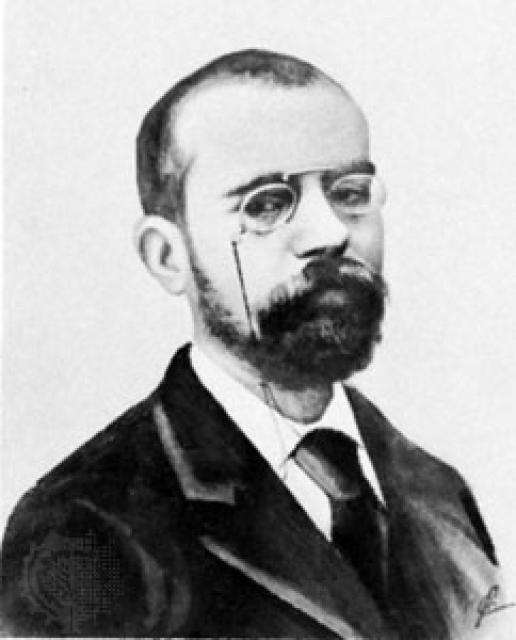
Leopoldo Alas y Urena
 Spain
Spain- Early Life and Education
- Journalism and Academic Career
- Clarín the Critic
- Novels and Social Commentary
- Collaboration and Film Adaptation
- Legacy and Influence
Early Life and Education
Leopoldo Alas y Ureña, better known by his pen name Clarín, was born in Zamora, Spain, on April 25, 1852. He spent his childhood in León and Guadalajara before relocating to Oviedo in 1865.
Journalism and Academic Career
In 1871, Alas y Ureña embarked on a journalism career in Madrid, which lasted until 1878. In 1883, he returned to Oviedo as a professor of Roman law.
Clarín the Critic
As a literary critic, Alas y Ureña became a staunch advocate of naturalism. However, his own literary works exhibited a blend of realism and social critique. He is credited with inspiring a generation of young Spanish writers who broke away from the romanticism of the mid-19th century.
Novels and Social Commentary
Alas y Ureña's most celebrated novels include "La Regenta" (1884) and "Su Único Hijo" (1890). Both works excoriate the aristocracy and clergy from a bourgeois-liberal perspective.
Collaboration and Film Adaptation
In 1882, Alas y Ureña collaborated with Armando Palacio Valdés on the collection of essays "La Literatura en 1881." In 1974, Spanish director Gonzalo Suárez directed a film adaptation of "La Regenta," based on Alas y Ureña's novel.
Legacy and Influence
Leopoldo Alas y Ureña's contributions to Spanish literature have left an enduring legacy. As Clarín, he was a formidable critic who shaped the literary landscape of his time. His novels remain powerful indictments of the social and political mores of 19th-century Spain.




