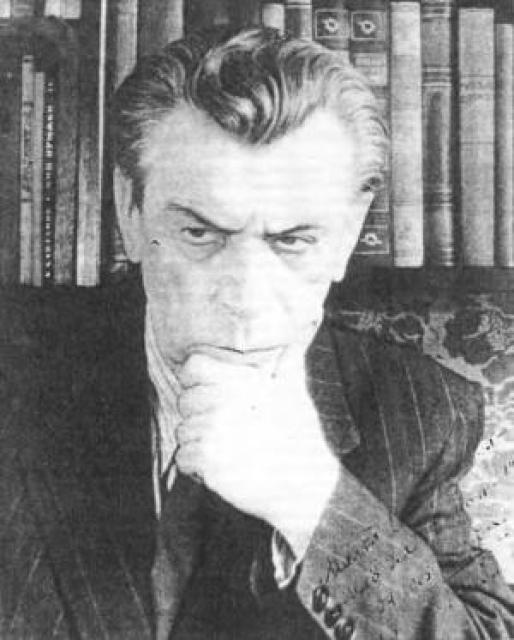
Lev Gumilevsky
- Early Life and Education
- Literary Beginnings and Civil War
- "Dog Alley" Controversy
- "Lives of Remarkable People"
- Other Works and Legacy
Early Life and Education
Lev Gumilevsky was born on March 1, 1890, in Atkarsk, Saratov Governorate, to an official's family. He attended high school in Saratov and Kazan University, where he was expelled in his second year for non-payment of tuition. He subsequently enrolled in the Saratov Agricultural Institute.
Literary Beginnings and Civil War
Gumilevsky began publishing his work in 1910, debuting with poetry. After the October Revolution, he edited the magazine "Volny Plug" and worked in the press in Petrograd and Saratov during the Civil War, also holding positions in cultural and educational institutions. He later relocated to Moscow.
"Dog Alley" Controversy
In 1927, Gumilevsky's novel "Sobachy Pereulok" ("Dog Alley") sparked a debate on morality. Its naturalistic depiction of youth love and lifestyle during the New Economic Policy era drew criticism and led to a ban on his publications. Maxim Gorky intervened and helped him secure a position at the editorial board of the "Lives of Remarkable People" series.
"Lives of Remarkable People"
From the early 1930s onward, Gumilevsky was invited by Gorky to contribute to the "Lives of Remarkable People" series. Among his most notable biographies were "Butlerov" (1951), "Vernadsky" (1961), "Zinin" (1965), "Chaplygin" (1969), and "Chernov" (1975).
Other Works and Legacy
In addition to the "Lives of Remarkable People" series, Gumilevsky also wrote an agitprop play titled "Ruler of the World" (1921). He also authored ethnographic and pseudo-historical stories, such as "Land of the Hyperboreans" (1927) and "White Lands" (1930). Gumilevsky died on December 29, 1976, and was buried in the Vvedenskoye Cemetery in Moscow.