Lillian Moller Gilbreth
 USA
USABiography of Lillian Moller Gilbreth
Early Life and EducationLillian Moller Gilbreth, born Lillie Evelyn Moller, was born on May 24, 1878, in Oakland, California. She was the second of ten children of William Moller and Annie Delger Moller, both of German descent. Lillian was homeschooled until the age of nine when she began attending Oakland High School. Despite starting over, she quickly progressed through the classes and was elected vice-president of her senior class. In May 1896, Lillian graduated from high school with honors. She later attended the University of California, where she earned a Bachelor's degree in English literature in 1900. Initially, she had planned to pursue a degree at Columbia University but fell ill and returned home. In 1902, she obtained a Master's degree in literature from the University of California, with her dissertation focusing on Ben Jonson's play "Bartholomew Fair." Lillian then went on to attend Brown University in New England, where she earned a Ph.D. in 1915 with her second dissertation on effective teaching methods.
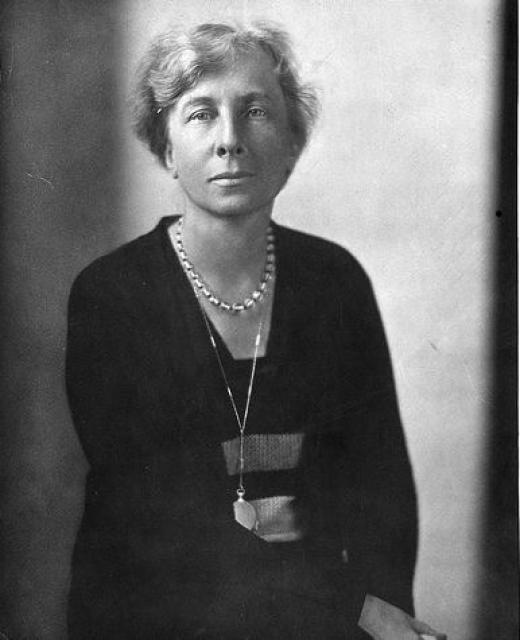
Career and Contributions
As a promising engineer, wife, and mother, Gilbreth dedicated herself to helping industrial engineers understand the importance of psychological aspects in work. She became the first American engineer to combine psychology and scientific management effectively. After marrying Frank Bunker Gilbreth, Sr. on October 19, 1904, the couple planned to have a family of twelve children. They successfully realized this plan, with only one child not surviving to adulthood. Gilbreth's children often became participants in her experiments. She played a crucial role in shaping the modern kitchen, introducing the concept of the "work triangle" and designing linear kitchen layouts. In addition to raising her children, Gilbreth wrote books that helped companies improve their management skills. Her work in government began through her longstanding friendship with Herbert and Lou Henry Hoover. At Lou's request, Lillian joined the Girl Scouts as a consultant in 1929 and later served on the board of directors for the youth movement. She remained active in the organization for over 20 years. Under the Hoover administration, Gilbreth led the women's division of the President's Emergency Committee for Employment in 1930, collaborating with women's groups to reduce unemployment rates. During World War II, she advised several government groups, sharing her knowledge of education and labor, including the US Navy. After her husband's death, Lillian began lecturing at Purdue University in 1925, where Frank had previously taught. By 1940, she became a full professor, juggling responsibilities across the faculties of industrial construction, industrial psychology, home economics, and working in the dean's office, where she provided career advice to women. She left Purdue in 1948. At the age of 86, Gilbreth became a resident lecturer at the Massachusetts Institute of Technology (MIT) in 1964. She passed away on January 2, 1972, at the age of 94, in Phoenix, Arizona.