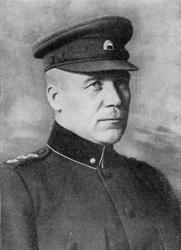
Liutprand Kremonskiy
 Italy
Italy- Liutprand of Cremona: A Renowned Historian and Diplomat
- Early Career and Education
- Diplomatic Missions and Antapodosis
- Bishop of Cremona and Later Missions
- Writings and Legacy
Liutprand of Cremona: A Renowned Historian and Diplomat
Liutprand, a renowned historian and diplomat of the 10th century, left a lasting legacy through his writings and diplomatic missions. Born into a prominent family in Pavia, Italy, Liutprand's early life was marked by his father's diplomatic service in Byzantium.
Early Career and Education
Liutprand's intellectual journey began at the court of King Hugh of Italy in 931. There, he received an exceptional education, laying the foundation for his future accomplishments. With the passing of Hugh in 947, Liutprand became the personal secretary to Berengar of Ivrea, the future king.
Diplomatic Missions and Antapodosis
Liutprand's proficiency in Greek propelled him to the position of ambassador to Constantinople in 949, where he spent four months at the court of Emperor Constantine VII Porphyrogenitus. Upon his return, a rift developed between himself and Berengar. The details of his journey to Byzantium and his disillusionment with Berengar were meticulously chronicled in his seminal work, "Antapodosis" (literally, "Giving Back").
Seeking refuge, Liutprand left Pavia for the court of Otto the Great, king of Germany and a rival to Berengar. He accompanied Otto on his 961 expedition to Italy, which culminated in Otto's imperial coronation in 962.
Bishop of Cremona and Later Missions
Liutprand's diplomatic endeavors continued after his appointment as Bishop of Cremona in 962. In 963, he participated in a secret council of bishops in Rome that led to the deposition of Pope John XII.
In 968, Liutprand embarked on a second embassy to Constantinople, aiming to arrange a marriage alliance between Otto the Great's son, Emperor Otto II, and Theophano, daughter of the late Byzantine Emperor Romanos II. However, his mission was unsuccessful, and he faced hostile reception from Emperor Nikephoros II Phokas.
Writings and Legacy
Liutprand's literary contributions made him a significant figure in medieval historiography. His major works include:
Antapodosis (958-962):A six-book historical chronicle with autobiographical elements, written to expose Berengar's duplicity.
Deeds of Otto (960-964):A 22-chapter history of Emperor Otto the Great's reign, focusing on his second Italian campaign.
Embassy to Constantinople (969):An epistle addressed to Otto the Great and his son, detailing his unsuccessful mission to Constantinople and criticizing Emperor Nikephoros II.
Liutprand's writings offer invaluable insights into the political and diplomatic landscape of his era, shedding light on the complexities of medieval diplomacy and the relationships between the Holy Roman Empire and the Byzantine Empire. His works continue to be studied and analyzed by historians, providing a rich source of information about a pivotal period in European history.