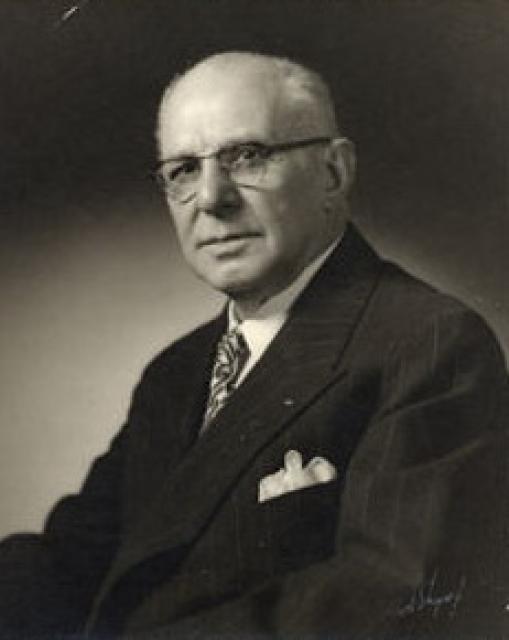
Lloyd Copeman
 Sudan
Sudan- Lloyd Copeman: The Inventor Behind Household Conveniences
- Early Life and Education
- Electrical Innovations
- Electric Stoves
- Automatic Toasters
- Copeman Laboratories and Further Inventions
- Rubber Ice Cube Trays
- Later Life and Family
Lloyd Copeman: The Inventor Behind Household Conveniences
Lloyd Copeman, an American inventor, made a significant contribution to home life, developing the first electric stove and the flexible rubber ice cube tray, a precursor to modern silicone trays.
Early Life and Education
Copeman was born on December 28, 1881, in Hadley Township, Michigan, to Canadian parents. He studied engineering at the former Michigan Agricultural College, now Michigan State University.
Electrical Innovations
In 1909, Copeman patented a temperature regulator for more efficient control of stoves and toaster elements, and a thermostat for high-voltage power cables. While working for the Washington Electric Company in 1906, he designed an electric version of the gas stoves that had dominated American and British kitchens for decades.
Electric Stoves
Copeman's electric stove design took several years to perfect, but in 1912, he founded the Copeman Electric Stove Company in Flint, Michigan, to manufacture his invention, marketed as "fireless fire stoves." The company was purchased by the Westinghouse Electric Corporation five years later, and production was moved to Mansfield, Ohio, where further development and improvement of Copeman's electric stoves continued.
Automatic Toasters
In 1913, Copeman's company introduced another innovation: a toaster with an automatic flipping mechanism. Inspired by his wife Hazel's complaint during a shopping trip, Copeman filed the patent for the "automatic toaster" in Hazel's name. He registered half a dozen toaster improvements in 1913-1914, but the invention of a mechanism to eject the toasted bread in the 1920s rendered them obsolete.
Copeman Laboratories and Further Inventions
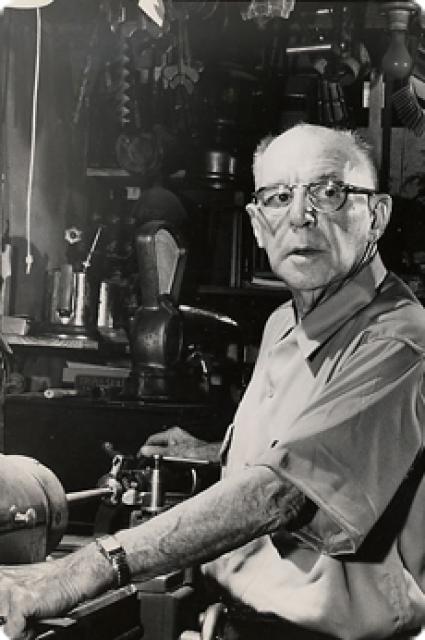
In 1918, Copeman founded the Copeman Laboratories Company to focus on new inventions. He continued to spend much time at his farm, where he would often retreat to his basement workshop for weeks at a time, with his wife bringing food and collecting empty dishes. Copeman developed a wide range of products during this period, including injections to make chicken taste like beef, early experiments with latex, a dry ice device for chilling beer bottles, self-extinguishing cigarettes, paper cartridges for wheel bearing lubricant (a patent later sold to the Alemite Manufacturing Corporation for $178,000), the still-produced "Flexo-Line" clothesline, and more.
Rubber Ice Cube Trays
Perhaps Copeman's most commercially successful invention was the rubber ice cube tray. Observing ice chips easily detaching from rubber boots while collecting maple sap, he experimented with rubber containers and developed several ice tray designs: a metal tray with rubber dividers, a metal tray with individual rubber cups, and a fully rubber tray. Copeman earned an estimated $500,000 from this invention, equivalent to $10 million today.
Later Life and Family
Copeman died on July 5, 1956. He married Hazel in 1904, and they had three children: a son and two daughters. Copeman's granddaughter, Linda Ronstadt, became a pioneering country music singer and one of the most successful and acclaimed vocalists with 11 Grammy Awards to her name.