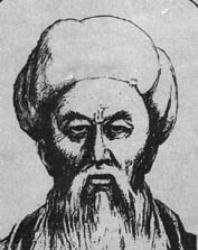
Lu Xun
 China
ChinaBiography of Lu Xun
Lü Xun or Lu Xun was the pen name of Zhou Shuren (September 25, 1881 – October 19, 1936), one of the greatest Chinese writers of the twentieth century. He is considered the founder of modern Chinese literature and had a significant influence on the development of Chinese literature and socio-political thought in the first half of the 20th century. His most famous works include "The True Story of Ah Q" and "Diary of a Madman".
Early Life and Education
Lü Xun was born in Shaoxing, Zhejiang Province in China. He came from a highly educated family, with his grandfather, Zhou Fuci, holding a position in the Hanlin Academy. However, the family's luck turned after an incident involving bribery, resulting in Zhou Fuci's arrest and near execution. Despite this, Lü Xun was raised by the family's senior servant, a man named A Chang, whom Lu Xun referred to as Chang Ma.
Lu Xun developed an interest in literature from an early age, and one of his favorite childhood books was "Classics of the Sea and Ocean". His father's chronic tuberculosis and premature death motivated Lu Xun to study medicine. He chose to pursue a Western medical degree at the Sendai Medical Academy in Sendai, Japan, in 1904.
Literary Career
Lu Xun's exposure to Western education and science during his time in Japan influenced his writing style. He began his literary career by writing essays on various subjects, including the history of science, Chinese and European literature, Chinese society, reforms, and religion in China. He also translated foreign literary works into Chinese.
Returning to China, Lu Xun became a teacher at various schools and later served as the Minister of Education in Beijing after the founding of the Republic. He gained widespread recognition after publishing his famous works, such as "The Diary of a Madman" in 1918 and "The True Story of Ah Q" from 1921 to 1922. Lu Xun's writings were critical of outdated Chinese traditions and feudal systems.
In 1930, Lu Xun organized the "League of Left-Wing Writers," which brought together influential writers of the time. Although sympathetic to leftist ideas, Lu Xun never joined the ranks of the Communist Party of China. He continued to contribute to the literary scene by translating Russian literature and writing satirical essays.
Legacy and Death
Lu Xun's role in the establishment of the Chinese Republic and his literary contributions made him a prominent figure in Chinese history. However, his works were banned in Taiwan until 1980 due to his involvement in the Republic's history.
In 1936, Lu Xun was diagnosed with tuberculosis, which severely affected his lungs. He passed away on October 19, 1936. His remains are enshrined in the Lu Xun Park Mausoleum in Shanghai.