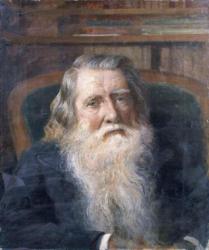
Luc de Clapiers de Vauvenargues
 France
- Luc de Clapiers, Marquis de Vauvenargues: French Moralist
- Military Service and Literary Pursuits
- Early Recognition
- Parisian Literary Circle and First Publication
- Ethical and Political Philosophy
- Determinist Approach to Free Will
- Social Importance of Virtue
- Restoration of Human Dignity
- Legacy and Critical Acclaim
Luc de Clapiers, Marquis de Vauvenargues: French Moralist
One of the most celebrated French moralists, Luc de Clapiers, Marquis de Vauvenargues, rose to prominence through his profound writings, which delved into the realms of ethics, politics, and the human spirit.
Military Service and Literary Pursuits
Born into nobility, Vauvenargues embarked on a military career, participating in the Italian and Bohemian campaigns of 1735 and 1742. However, a bout of smallpox left him disfigured and forced him to retire from military service. This setback also thwarted his diplomatic aspirations, leading him to focus on literary pursuits.
Early Recognition
Vauvenargues's early brilliance was recognized by none other than Voltaire, to whom he penned a comparative study of Corneille and Racine while serving as a lieutenant in the Bohemian campaign. Voltaire astutely discerned the young officer's exceptional intellect.
Parisian Literary Circle and First Publication
After leaving the army, Vauvenargues settled in Paris and became part of Voltaire and Marmontel's literary circle. His youthful idealism and unwavering moral code had a profound influence on Voltaire. In 1746, Vauvenargues published his first volume, comprising various essays and maxims that showcased his ethical and political views.
Ethical and Political Philosophy
Vauvenargues's writings, particularly his "Réflexions et Maximes" and "Introduction à la connaissance de l'esprit humain," cemented his reputation as a prominent moralist alongside Montaigne, La Bruyère, and Pascal. His ethical and political philosophy emphasized the importance of altruism and the pursuit of virtue for the greater good of society.
Determinist Approach to Free Will
In the "Introduction," Vauvenargues explored philosophical questions that preoccupied his contemporaries, such as free will. He adhered to a determinist perspective, arguing that actions are governed by reason or emotion, with the illusion of free will arising from the fleeting nature of thought and feeling.
Social Importance of Virtue
Vauvenargues believed that virtue lay in actions that benefited the collective rather than the individual. He saw reason as playing a secondary role in moral behavior, attributing greater significance to sentiment and intuition.
Restoration of Human Dignity
In contrast to the pessimism of Pascal and the cynicism of La Rochefoucauld, Vauvenargues aimed to restore the dignity of human nature. He advocated for the acceptance of noble passions and proposed an active, humane morality.
Legacy and Critical Acclaim
Vauvenargues's writings resonated with readers, especially due to their insights into the human soul and their affirmation of human potential. His works continue to be highly regarded and have been the subject of numerous critical studies and editions, including the notable edition by Gilbert in 1857.