Lucas Samaras
 USA
USA- Lucas Samaras: A Greek-American Postmodernist
- Early Life and Education
- Academic Studies and Artistic Beginnings
- Optic and Photographic Explorations
- International Recognition and Retrospective Exhibitions
- Digital and Multimedia Art
Lucas Samaras: A Greek-American Postmodernist
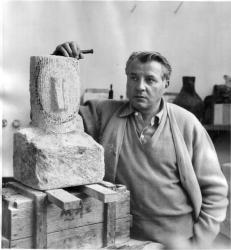
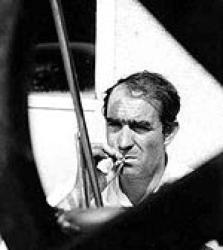
Lucas Samaras, a Greek-American artist and postmodern sculptor, is celebrated for his avant-garde, neo-Dadaist works that span various genres, including absurdist sculptures and video art. His creations have made him an influential figure in contemporary art.
Early Life and Education
Samaras was born in Kastoria, Western Macedonia, Greece on September 14, 1936. In 1948, he and his mother joined his father in New Jersey, where they settled. From 1951 onwards, Samaras attended Memorial High School in West New York, New Jersey. After obtaining American citizenship in 1955, he enrolled at Rutgers University in New Brunswick, earning a scholarship from the state of New Jersey. It was here that he met Allan Kaprow and George Segal, collaborating with the former on happenings and serving as a model for Segal's plaster cast sculptures.
Academic Studies and Artistic Beginnings
After graduating from Rutgers University, Samaras studied art history at Columbia University from 1959 to 1962, under the guidance of Meyer Schapiro, an influential art theorist and critic. His early recognition as an artist and sculptor came in the early 1960s for his "boxes," which were decorated with glittering rhinestones and beads, but unexpectedly adorned with protruding needles, nails, and razor blades. Inside these boxes, he concealed knives, taxidermied birds, stones, mirrors, portrait photographs, and tangled hair.
Optic and Photographic Explorations
From the mid-1960s onwards, Samaras employed transparent and reflective materials to create complex, multi-layered optical effects in gallery and museum spaces, as seen in works like "Mirror Room" (1966). In his photographic series from the late 1960s onwards, he explored self-representation, often distorting and traumatizing his own image. Experimenting with multimedia collages and manipulating Polaroid film, he created "Photo-Transformations," which evoked feelings of unease and alienation in viewers.
International Recognition and Retrospective Exhibitions
Samaras participated in the fourth documenta in Kassel in 1968, documenta 5 in 1972, and documenta 6 in 1977. In 1986, he was awarded the Infinity Award for Art. His first major retrospective exhibition was held at the Whitney Museum, New York in 1982. Subsequent retrospectives were presented at the Centre Pompidou in Paris in 1988 and at five American museums in 1996. Samaras represented Greece at the 53rd Venice Biennale in 2009 with his multimedia installation "PARAXENA."
Digital and Multimedia Art
In recent years, Samaras has ventured into the realm of digital art, combining photographs with virtual reality. He has also created a series of voiced short video films called "Photoflicks."