Lucien Lelong
 France
Biography of Lucien Lelong
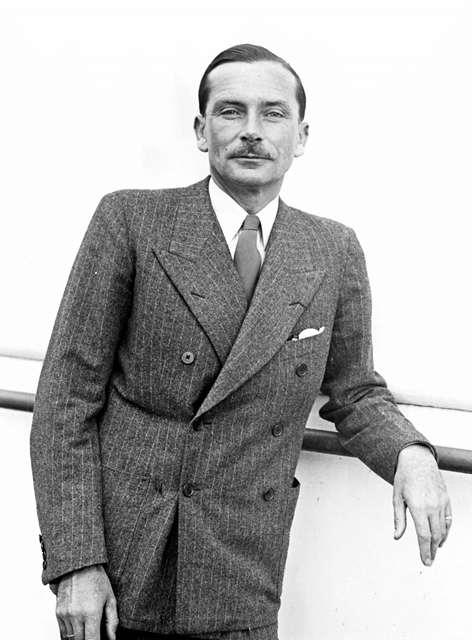
Early Life and CareerLucien Lelong, a French couturier and industrialist, was born on October 11, 1889, in Paris. He was the son of Arthur Lelong, the owner of a textile industry shop. Lucien studied business at the Hautes Études des Commerciales in Paris. However, his military service was called just two days before the debut of his first clothing line, which was scheduled to be showcased in his father's shop on August 4, 1914. Lucien was mobilized on August 2, 1914, and was severely wounded by a shell explosion on May 24, 1917, spending nine months in the hospital. He became one of the first Frenchmen to receive the War Cross for his heroic actions. After his recovery in 1918, he returned to work with his father and by 1923, Lucien started working under his own name.

Parisian Fashion Career
As a contemporary of designers such as Chanel, Vionnet, Lanvin, Molyneux, and Patou, Lelong focused on designing fashionable models for the "café society," the "beautiful people" who gathered in trendy cafes and restaurants in New York, Paris, London, Vienna, and Istanbul during the 1920s and 1930s. His collections were characterized by classic lines derived from the contour of each era's forms and silhouettes. Lelong was not considered a pioneer or innovator but rather concentrated on producing high-quality garments and construction. However, he was the first designer to introduce more affordable fashion lines called "Édition" in 1933 to meet the demands of less affluent clients. At the height of his career, Lelong employed 1,200 workers. In 1937, he was elected president of the Chambre Syndicale de la Couture, becoming a fierce advocate for French fashion.

Heroic Diplomatic Efforts
Facing the threat of the relocation of high-quality couture to Berlin and Vienna during the German occupation of Paris, Lelong managed to outwit the Germans through negotiations, persuasion, cunning tricks, and outright lying. He famously said, "One of the first things the Germans did was to invade the Syndicate and seize all documents related to French export trade. I told them that haute couture was like brick-laying, an industry that couldn't be moved." When no foreign buyers appeared in Paris after the outbreak of war, Lucien sent emissaries to New York with dresses and other fashion samples to prove that fashion was still a viable industry despite the wartime circumstances. In 1941, the Germans started issuing "textile cards" with a points-based ranking system evaluating each fashion house. Complying with all the rules would have meant the end of Parisian fashion. Through difficult negotiations, Lelong managed to exempt 12 fashion houses from this burden. Unfortunately, six months later, the Germans noticed that 92 houses were still operating freely. Ultimately, only 60 fashion houses were saved. Despite these challenges, Lelong's diplomatic efforts saved the jobs of 12,000 workers who were at risk of deportation and being forced to work in the German war industry.
Legacy
Lucien Lelong retired in 1948 after enduring the hardships of war and his own injury. Ten years later, on May 10 (or 11), 1958, he passed away from a heart attack in Anglet, north of Biarritz. Throughout his career, he showcased 110 collections, and even after stepping away from clothing, he continued to create perfumes. From 1924 to 1950, he created around 40 different fragrances, dedicating one to Princess Natalie Paley, the daughter of Grand Duke Paul Alexandrovich and his morganatic wife, Olga Karnovich. Paley was also a model for his collections. Lelong married her on August 10, 1927, and divorced in 1937. Prior to that, he was married to Anne-Marie Audoy, whom he divorced on July 16, 1927. Maurice Goudeket, a French journalist, became Lelong's third and surviving spouse in 1954.
While Lelong was an excellent couturier, he is best remembered as the leading fashion diplomat during the German siege on Parisian fashion. He saved the industry and the livelihoods of thousands of workers through his negotiations and strategic efforts.