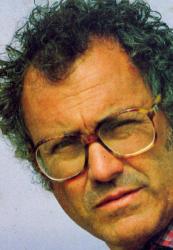
Lucius Accius
 Italy
ItalyBiography of Lucius Accius
Lucius Accius was an ancient Roman poet and tragedian. He was a prolific writer and held a high reputation, although only the titles and fragments (about 700 lines) of his plays have survived to this day, which numbered at least fifty. He was born around 170 BCE and was the son of a freedman from Pisaurum, an ancient city in Umbria, on the northeast coast of Italy. The exact date of his death is unknown, but it is speculated that he died around 86 BCE, living to a ripe old age, as Cicero, who was born in 106 BCE and was thus 64 years younger than Lucius Accius, claimed to have conversed with him about literature.
Works and Themes
From the surviving titles and fragments, it is believed that the majority, if not all, of his poems were tragedies, although Pliny the Younger, for some reason, classifies him as an erotic poet. Most of his poetic works were imitations or free translations of Greek authors, especially Aeschylus. One of his earliest works was the tragedy "Atreus," written around 140 BCE and now lost. One of the surviving lines from "Atreus," "oderint dum metuant" ("let them hate, so long as they fear"), later became the infamous motto of Caligula.
In addition to Greek themes, he also wrote about Roman subjects, including an exploration of the nature of tyranny in Lucius Tarquinius Superbus and his overthrow by rebels led by Lucius Junius Brutus. This work was called "Brutus" and was likely written in honor of his patron, the politician and military leader Decimus Junius Brutus Callaicus. His favorite topics were legends of the Trojan War and the reign of Pelops. Although only fragments remain, with the most important ones preserved thanks to Cicero, they are sufficient to understand the admiration with which writers of antiquity spoke of Lucius Accius. He was particularly praised for his powerful and energetic language and lofty thoughts. Despite some of his colleagues mocking the grandiosity of his style, others continued to quote and refer to his works long after his death.
Other Literary Works
In addition to his plays, Lucius Accius also wrote other literary works. Among them were the "Libri Didascalicon," a treatise in verse on the history of Greek and Roman poetry, particularly drama. He also wrote the completely lost works "Libri Pragmaticon," "Parerga," and "Praxidica," of which not a single line remains. He composed the "Annales" in hexameter, a work on the history of Ancient Rome, similar to Quintus Ennius. Lucius Accius also attempted to introduce some innovations into Latin grammar and spelling to simplify written Latin and bring it closer to the norms of his contemporary pronunciation. Only a few of these changes gained traction, although his proposal not to give Greek names Latin endings found many supporters, including Marcus Terentius Varro, who dedicated his work "De ambiguitate litterarum" to Accius.
Political and Personal Life
In politics, Lucius Accius was conservative and overall renowned for his dignity and restraint. He believed that individuals with literary talent, like himself, were more deserving of respect than those who were simply born into noble families. Some sources claim that Accius had a considerable amount of self-esteem, and some writers mocked him for erecting his own statues in the Temple of the Muses.