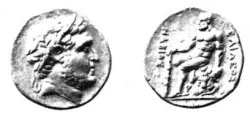
Lucius Junius Brutus
Lucius Junius Brutus occupies a place at the boundary between history and Roman foundation legend. Roman tradition made him the leader who expelled the last king and helped establish the Republic in 509 BC. The dramatic details of his life come from accounts written centuries later, but the figure became a lasting symbol of resistance to monarchy and devotion to civic duty.
Origins in Roman Tradition
The earliest years attributed to Brutus are known through stories preserved by later Roman writers, especially Livy. In one account, he was related to the royal family and survived the violence of King Tarquinius Superbus by pretending to be simple-minded. The name “Brutus” was connected in the story with this supposed dullness. Such details cannot be independently verified and were part of the Romans’ traditional explanation of how their Republic began.
The story places Brutus at the center of the crisis that toppled the monarchy. Sextus Tarquinius, son of the king, raped Lucretia, a noblewoman and wife of Lucius Tarquinius Collatinus. After telling her family what had happened, Lucretia died by suicide. The traditional narrative says that Brutus drew the weapon from her body, swore to drive out the Tarquins, and called on the Roman people to reject royal rule.
The First Consuls
According to the Roman annalistic tradition, Brutus led the uprising that forced Tarquinius Superbus and his family into exile. The change was traditionally dated to 509 BC. Brutus and Collatinus were then elected as the Republic’s first two consuls, the annual magistrates who shared the highest executive authority.
Collatinus soon became politically vulnerable because of his family name. Brutus reportedly persuaded him to resign and leave Rome, arguing that the presence of a Tarquin could threaten the new republic. Publius Valerius Publicola replaced him. These stories present the founding of the Republic as a struggle not just against a king, but against the possibility that power might again become hereditary.
A Legendary Test of Loyalty
Roman accounts also made Brutus’s family life part of the republic’s origin story. His sons Titus and Tiberius were said to have joined a plot to restore the Tarquin dynasty. When the conspiracy was uncovered, Brutus, acting as consul, ordered their execution. Livy described him as showing visible grief while still enforcing the sentence. The episode became a Roman moral example of public duty placed above private affection.
The tradition gives Brutus a final death in battle. At the Battle of Silva Arsia, fought against forces seeking to restore the Tarquins, he encountered the king’s son Arruns in combat. The two men killed one another. Roman accounts portrayed Brutus as dying in defense of the Republic he had helped create.
Legacy
Because the surviving narratives were composed long after the events they describe, historians cannot treat every episode as established fact. The expulsion of the monarchy and the creation of the consulship may preserve memories of a real political transition, but Brutus’s speeches, his sons’ conspiracy, and his dramatic final battle belong to a foundation story shaped by later Roman values.
That story remained powerful. Romans honored Brutus as a liberator and as a model of republican resolve. Centuries later, Marcus Junius Brutus—one of Julius Caesar’s assassins—invoked the memory of this legendary ancestor. Lucius Junius Brutus endured as a symbol of the Republic’s founding principle: that Rome should have no king.