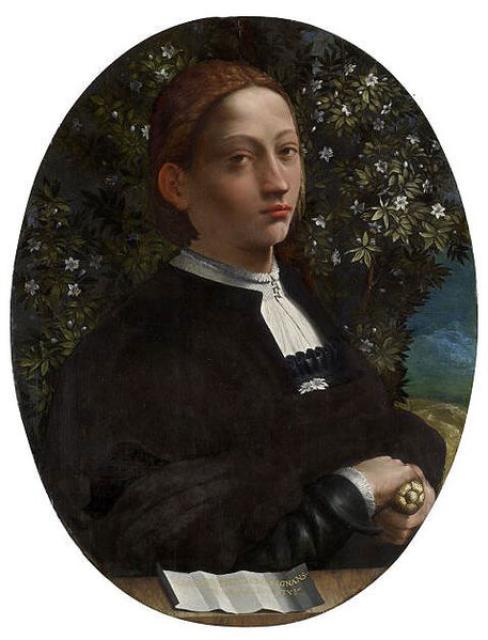
Lucrecia Borgia
 Italy
ItalyBiography of Lucrezia Borgia
Early Life and FamilyLucrezia Borgia was born as the illegitimate daughter of Pope Alexander VI (Rodrigo Borgia) and his mistress Vannozza dei Cattanei. She was born in 1480 and had three brothers, Cesare Borgia, Giovanni Borgia, and Joffre Borgia. The Borgia family was notorious for their ruthless political tactics and alleged sexual misconduct, which was characteristic of the papacy during the Renaissance era.
Artistic Depictions
Lucrezia has been portrayed as a femme fatale in various works of art, novels, and films. One of the most famous portraits of her is a painting by Dossi Dossi, displayed at the National Gallery of Victoria Art School in Melbourne. However, there is some debate about the authenticity of this portrait. Other paintings, such as one by Bartolomeo Venetiano, are not officially recognized as true depictions of Lucrezia. Most portraits depict her as a young woman with fair hair, light brown eyes, and a beautiful complexion, highlighting her natural beauty and elegance. These physical attributes were highly valued during the Renaissance period in Italy.
Marriages and Controversies
Lucrezia was married three times as part of her family's political ambitions. Her first husband was Giovanni Sforza, a member of the Sforza dynasty, with whom she had a lavish wedding. However, their political alliance soon became unfavorable for the Borgia family, leading to the annulment of the marriage.
Her second husband was Alfonso of Aragon, the Duke of Bisceglie, and a natural son of the King of Naples. Their marriage was considered the happiest of Lucrezia's unions. However, it is believed that Alfonso was eventually killed on the orders of Cesare Borgia when he was no longer useful to the family.
After the death of her second husband, Lucrezia entered into a third marriage with Alfonso d'Este, the Prince of Ferrara. They had several children together, and Lucrezia became a respected duchess.
Legacy and Controversies
Throughout history, Lucrezia Borgia has been surrounded by scandalous rumors, including allegations of incest, poisoning, and murder. However, there is no concrete evidence to support these claims, aside from testimonies from Borgia rivals.
Modern scholars have contested these rumors and highlighted Lucrezia's talents as a skilled stateswoman. She was even known to manage the Vatican in her father's absence. Lucrezia was a patron of the arts, particularly favoring religious-themed paintings. She was also praised by poets such as Niccolo de Correggio and Pietro Bembo.
Lucrezia Borgia died in 1519 at the age of 39 due to childbirth complications. She had embraced a more devout life in her final years and left behind a legacy as a strong and influential woman in Italian history.


