Ludwig Thoma
 Germany
Biography of Ludwig Thoma
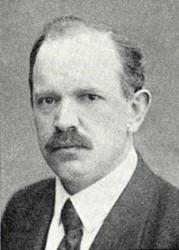
Ludwig Thoma, a German writer, depicted everyday life in Bavaria in the late 19th and early 20th centuries, using a realistic or satirical approach. Thoma was born into a large family of foresters, with a total of seven children. At the age of 7, after the family moved to the suburban town of Forstenried near Munich, he lost his father. Due to his uncompromising character, Ludwig had to change schools several times. One of his best works, "Lausbubengeschichten" (Stories of Rascals), is based on his personal memories of his school days.

After completing his secondary education, Thoma studied forestry in Aschaffenburg and then entered the law faculty at the University of Munich. In 1894, Thoma's mother passed away, and in the same year, he became a lawyer in Dachau. It was here, in his legal practice, that he became familiar with the "peasant types" whose customs he would later depict in his works. In 1897, Thoma moved to Munich, marking the beginning of his collaboration with the satirical magazine "Simplicissimus," where he published a series of his works under the pseudonym Peter Schlemihl. In 1899, the writer left his job as a lawyer and became a permanent contributor to Simplicissimus, eventually becoming its editor-in-chief in 1900.
In the literary field, Thoma gained fame for creating uncompromising satirical works such as short stories and one-act comedies, which ridiculed Prussian militarism and chauvinism, as well as the narrow-minded bourgeois Bavarian society with its double standards and limitations. In his major novels, Thoma portrays the harsh lives of peasant families, which he became acquainted with during his time as a lawyer. In the following years, Thoma embarked on several trips around Europe, continuing to write and creating plays such as "Die Medaille" and "Die Lokalbahn." In 1907, he married a 25-year-old Filipino dancer named Marietta di Rigardo (Marion). However, the marriage was not successful, as Marietta continued to lead a free-spirited lifestyle, leading to their separation in 1911.
In 1906, Thoma, along with Hermann Hesse, became the publisher of the magazine "März." In the same year, the writer was sentenced to six weeks of imprisonment for publishing a poem in Simplicissimus that allegedly offended public morality. In 1908, his comedy "Moral" premiered with great success. Thoma moved to Tegernsee in the same year. Until the start of World War I, Thoma held left-liberal political views, which can be seen in the sharply satirical nature of his literary works, criticizing the amoral society, bureaucratic state, and the Catholic Church. However, his political stance changed drastically in 1914 (as did the content of Simplicissimus). Thoma volunteered as a medic and was sent to the Eastern Front in Galicia in 1915. There, he fell seriously ill with dysentery and was sent to the rear. Becoming a "patriotic enthusiast," Thoma became a fierce advocate of the "war until the victorious end" and, following Germany's defeat in November 1918, he refused to participate in public life, retiring to his home in Tegernsee.
In 1918, Thoma began a relationship with Maidi Lieberman, a woman from a wealthy Jewish family of sparkling wine producers, Feist-Belmont. However, Maidi was married, and her husband refused to grant her a divorce. Thoma bequeathed a significant portion of his estate, including royalties from his published works, to this woman.
Between 1916 and 1921, the writer created numerous works. In the newspaper Miesbacher Anzeiger, he published a large number of anonymous, mostly antisemitic articles inciting pogroms, directed against the Social Democratic government in Berlin. During this time, he referred to the German capital as a "mixture of a Galician Jewish village and a New York gangster district." Thoma passed away from cancer in his home in Tegernsee.