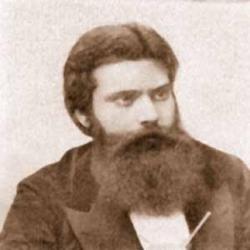
Ludwig von Sybel
 Germany
- Early Life and Education
- Academic Career
- Archaeological Discoveries
- Later Life and Legacy
- Major Publications
Early Life and Education
Heinrich Wilhelm Carl Julius Schliemann was born in Neubukow, Mecklenburg-Schwerin, Germany, on January 6, 1822, to Ernst Schliemann, a Lutheran minister, and Luise Sophie Schliemann. He had a keen interest in archaeology from a young age, inspired by his father's collection of ancient coins.
Academic Career
After completing his secondary education, Schliemann studied archaeology at the University of Rostock. He received his doctorate in 1844 and began teaching at the University of Marburg. He published several influential works on ancient art and mythology, including "Zur Mythologie der Ilias" (1877) and "Kritik des Ägyptischen Ornaments" (1883).
Archaeological Discoveries
Schliemann's greatest contribution to archaeology came from his excavations at the ancient city of Troy. In 1871, he began excavating the site of Hisarlik in present-day Turkey, based on his belief that it was the legendary city described in Homer's Iliad. His excavations revealed several layers of ancient settlements, including the ruins of the city that Schliemann identified as Troy.
Later Life and Legacy
Schliemann's discoveries at Troy brought him international fame and recognition. He continued to excavate other ancient sites, including Mycenae and Tiryns in Greece. Schliemann's work laid the foundation for modern archaeological research and inspired countless future archaeologists. He died in Naples, Italy, on December 26, 1890, leaving behind a lasting legacy in the field of archaeology.
Major Publications
"Zur Mythologie der Ilias" (1877)"Katalog der Sculpturen zu Athen" (1881)
"Kritik des Ägyptischen Ornaments" (1883)
"Weltgeschichte der Kunst bis zur Erbauung der Sophienkirche" (1888)